

For manystudent parents, the question is no longer “how do I check whether they’re studying?”, but “how can I help them study better without intruding?”. In 2026, with heavier workloads, frequent tests, digital platforms, and distractions always within reach, effective parental support becomesstrategic, data- and habit-based, not built on surprise quizzes or daily conflicts.educational technologytools likeStudierAIhelp turnstudy monitoringinto concrete support: understanding what works, what needs correcting, and how to motivate without unnecessary pressure.
Why in 2026 the parent’s role in studying has changed
In recent years, expectations of studentautonomyhave increased: assignments on platforms, materials shared online, more closely spaced tests, and continuous assessment. This means many kids manage (or should manage) a significant part of their organization on their own. At the same time, the digital environment makes studying richer, but also more fragile: it takes very little to go from an exercise to an endless feed.
In this context, the parent is no longer (only) the “homework checker,” but amethod facilitator: helping build sustainable routines, read signs of overload, and step in with small adjustments. The key point is moving from controlling the outcome to supporting the process: less “did you study?” and more “how are you studying, and what do you need to do it better?”.
This evolution is especially important when workloads increase (first two years, last three years, exams, make-up work) and when motivational dips emerge. “Strategic” parental support doesn’t take away autonomy: it strengthens it, because it makes habits visible and helps choose concrete actions.
What to really monitor: progress, method, and well-being (not just grades)
Grades are an indicator, but they often come late: when the problem is already entrenched. For reallearning support, it’s better to observe what comes before the grade: habits, session quality, and well-being. Monitoring doesn’t mean policing, but making certain useful signals measurable to understand whether the method works and where to intervene.
- Consistency: how many times they study during the week and how regularly, without leaving everything to the last minute.
- Session quality: overly long and “passive” sessions (just reading) often yield less than shorter but active sessions (exercises, questions, review).
- Understanding: can they explain it in their own words? Can they solve exercises without looking at the solution? This is where you see whether studying is effective.
- Time management: how much time it really takes to complete an assignment and how much is “study time” vs interrupted time.
- Well-being and stress: sleep, irritability, pre-test anxiety, feeling overwhelmed. A sustainable method must protect mental energy, not drain it.
When these indicators improve, results usually improve too. And if they worsen, you have an early signal to step in calmly, before the “grade crisis” hits.
How StudierAI helps parents monitor and improve their children’s study method
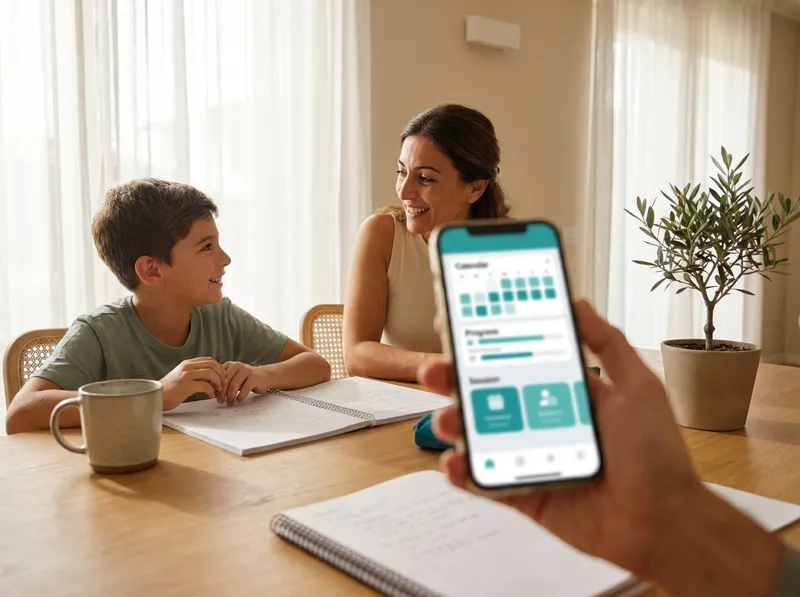
A tool likeStudierAIis useful when it makes simple what is often difficult at home: having a clear view of the study journey without turning everything into an interrogation. In practice, the platform supports three decisive areas:planning,progress trackingandmethod optimization, also helping parent-child communication.
1) Realistic (not perfect) planning. When the student sees what they have to do and when, anxiety decreases and the likelihood of starting increases. An effective plan takes into account: available time, priorities (tests and deadlines), alternating subjects, breaks, and recovery. The parent can support in the initial phase: not to decide in their place, but to check that the workload is sustainable.
2) Study monitoring focused on method. Instead of asking “how much did you study?”, you can observe: how many sessions they completed, how regularly, on which subjects, and whether they’re sticking to the planned timing. This kind ofstudy monitoringis useful because it shows trends: for example, if sessions are always skipped on a certain day, or if one subject absorbs too much time compared to the others.
3) Session optimization: studying better, not just more. Many kids “sit with their books” but with low yield. Effective support focuses on active techniques (questions, exercises, explaining out loud, spaced review) and on sessions with a clear goal. When the approach is more efficient, conflict at home often decreases too, because studying becomes more predictable and less exhausting.
4) Communication without intrusiveness. Data, if shared respectfully, can become a neutral language: not “you’re not putting in the effort,” but “this week there were few sessions: what got in your way?”. It’s a shift in tone that helps protect the relationship and keep the student in the lead.
If you want to see whether it’s right for your family, you canstart for freeor learn more on theabout uspage to understand the product’s approach and philosophy.
Routine and communication: how to use data to motivate without creating conflict
The value of data lies in how you use it. A report can become a weapon (“here’s proof you’re not doing enough”) or a bridge (“let’s see together what we can improve”). To keep things constructive, a simple routine works: a brief, regular check-in, with small, measurable goals.
Here are some practices that reduce conflict and increase motivation:
- Agree on a fixed time (10 minutes) once a week: regularity prevents daily arguments and makes the conversation more “neutral.”
- Start with a question, not a judgment: “What helped you most this week?” before “What didn’t you do?”.
- Define one goal at a time: for example, increase consistency (3 short sessions) before increasing total hours.
- Celebrate process progress: “You started on time three times” is worth as much as a good grade, because it builds confidence and continuity.
- Protect well-being: if stress rises, the “perfect plan” is useless. Better to scale back, reorganize, and work on more efficient techniques.
One last point: data must remain a growth tool, not a control system. When the student feels the goal is to help them become autonomous, they’ll be more willing to share difficulties and try improvements. In this sense,educational technologytruly works when it supports the relationship: less tension, more clarity, more personal responsibility.
If you want to start with a light approach, you cansign up for freeand try setting just one habit: for example, three short sessions a week with a clear goal. From there, using insights and small adjustments, it becomes easier to build a solid, sustainable method withStudierAI, without turning studying into a battlefield.
