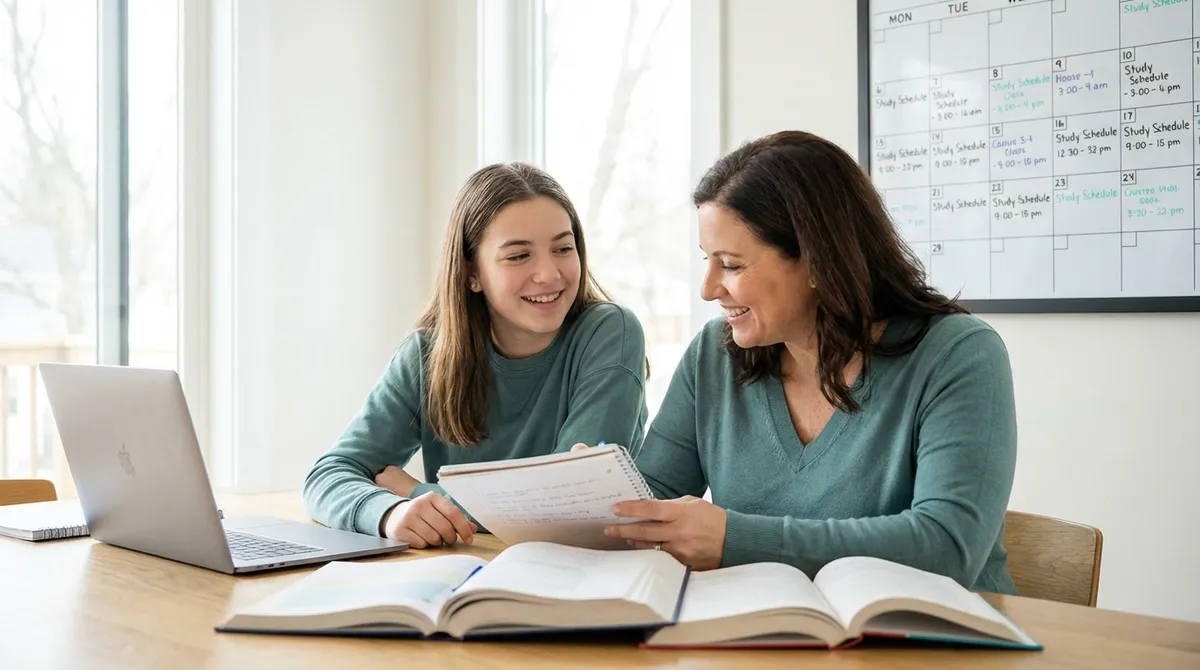

Exams can turn the home into an “operations center”: notes everywhere, schedules that keep changing, rising tension. During this period, many parents wonder how to offer real academic support without becoming enforcers—or, on the other hand, staying on the sidelines. The good news is that your role can make a difference: not by studying in your child’s place, but by helping them find method, calm, and consistency. In this article we’ll look at how to manage motivation, a study plan, effective strategies, and anxiety, with practical tips for parents who want to study-support and for those who truly want to help their children with exams.
Understanding needs and motivation: start by listening

Establish healthy routines: regular sleep, balanced meals, movement (even a 20-minute walk).
Do short “check-ins”: 5 minutes to understand how it’s going, without interrogations.processUse solution-oriented phrases: “What would help you take a step forward today?” instead of “Why didn’t you study?”.
Reduce noise at home during study blocks (loud TV, arguments, constant interruptions).
- If you notice intense anxiety (panic attacks, persistent insomnia, social withdrawal), consider talking with the school or a professional. It’s not a failure: it’s a responsible way to take care of well-being.
- When extra help is needed: how StudierAI can support your child
- Recognize progress (even small) to reinforce effort, not just grades.
- StudierAI
Create a realistic (and sustainable) study plan for exams
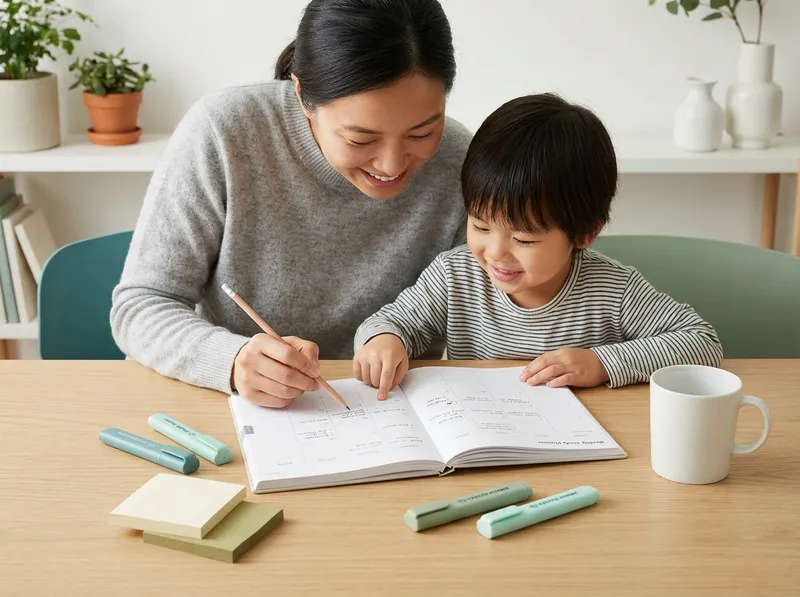
Createpersonalized study plansbased on available time, subjects, and goals, with a clear day-by-day structure.
Generate
- summaries and outlines to simplify review and focus on key concepts.
- Create
- quizzes to train active recall and immediately identify gaps.
Doguided review sessionswith questions, explanations, and checks, to study in a more active and less scattered way.
For parents, the advantage is having a clearer reference for what your child is doing and what goals they’re pursuing, reducing arguments and improvisation. If you want to try it, you can

plans and pricing
1)In summary: listening, sustainable planning, active techniques, and a stable emotional climate are the pillars for helping children with exams. With these elements, studying becomes more manageable and less burdensome, and your child can approach the test with greater confidence and autonomy.: after studying a paragraph, close the book and explain out loud (or in writing) the main concepts. If they can’t, it’s a useful signal: that point needs reviewing.
2)Exercises and error correction: do exercises “similar to exam ones” and keep a list of recurring mistakes (distraction, formula, logical step). Correction is worth as much as the exercise.
3)Simulations: recreating exam timing and conditions reduces anxiety and improves time management. Even a 20-minute mini-simulation is useful.
4)Flashcards and questions: perfect for definitions, dates, formulas, vocabulary. Ideally, review them spaced over days, not all at once.
If your child agrees, you can act as an “interviewer”: ask questions, request examples, point out unclear parts. The focus isn’t to judge, but to train explanation and confidence.
Emotional support and managing performance anxiety

Performance anxiety isn’t just “nerves”: it can block memory, concentration, and reasoning ability. The most effective academic support is often emotional: creating a context in which studying is important, but doesn’t define personal worth.
Some practical strategies:
- Establish healthy routines: regular sleep, balanced meals, movement (even a 20-minute walk).
- Do short “check-ins”: 5 minutes to understand how it’s going, without interrogations.
- Use solution-oriented phrases: “What would help you take a step forward today?” instead of “Why didn’t you study?”.
- Reduce noise at home during study blocks (loud TV, arguments, constant interruptions).
If you notice intense anxiety (panic attacks, persistent insomnia, social withdrawal), consider talking with the school or a professional. It’s not a failure: it’s a responsible way to take care of well-being.
When extra help is needed: how StudierAI can support your child

Sometimes the effort is there, but concrete guidance is missing: what to review today, how to check whether it’s been understood, how to turn pages of theory into exercises. In these cases, a tool likeStudierAIcan become an ally for daily studying, without replacing school but making it easier to organize and review actively.
In practice, it can help your child to:
- Createpersonalized study plansbased on available time, subjects, and goals, with a clear day-by-day structure.
- Generatesummariessummaries and outlines to simplify review and focus on key concepts.
- Createquizzes and flashcardsquizzes to train active recall and immediately identify gaps.
- Doguided review sessionswith questions, explanations, and checks, to study in a more active and less scattered way.
For parents, the advantage is having a clearer reference for what your child is doing and what goals they’re pursuing, reducing arguments and improvisation. If you want to try it, you canstart for freeor take a look atplans and pricingto understand which solution best suits your needs.
In summary: listening, sustainable planning, active techniques, and a stable emotional climate are the pillars for helping children with exams. With these elements, studying becomes more manageable and less burdensome, and your child can approach the test with greater confidence and autonomy.