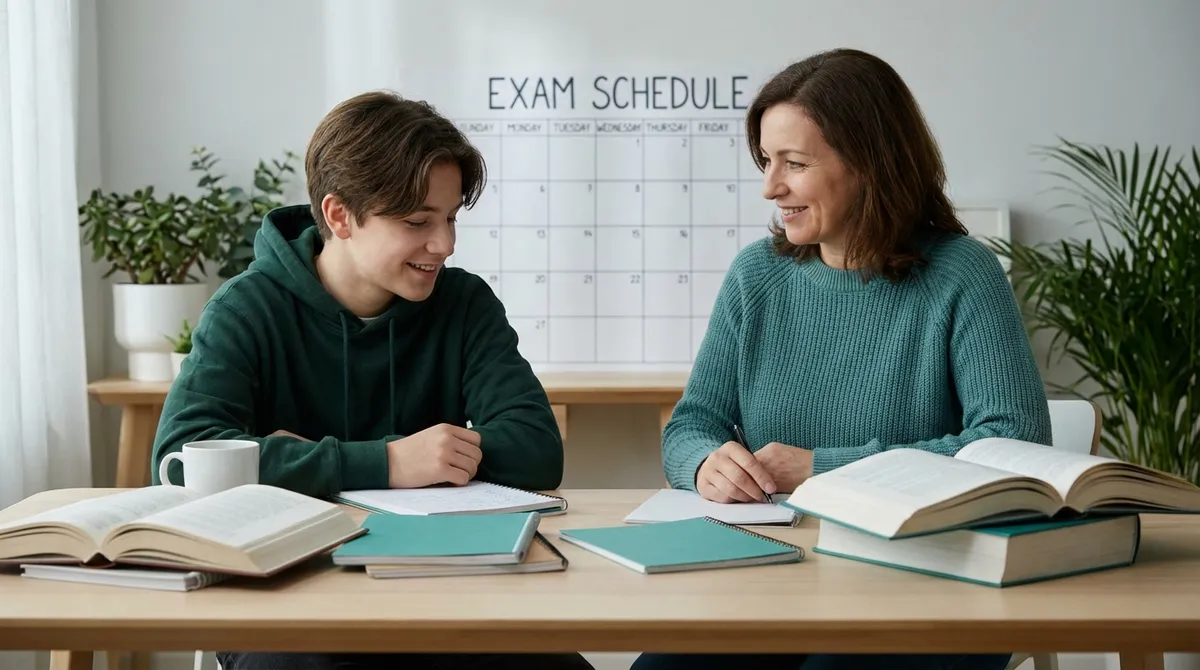
When exams arrive, many families switch into “emergency mode”: more hours on the books, more checks, more tension. In reality, the real advantage comes from a structured approach: understanding what your child is going through, creating a sustainable plan, and offering emotional support that strengthens autonomy. This article is designed forparents studywho want tohelp children examswithout taking their place, turningschool supportinto a repeatable method.
Understanding needs and motivations: the foundation of school support

Before the exam, focus on simple routines: adequate sleep, a light breakfast, materials ready the night before. If your child goes into meltdown, a quick technique is to bring them back to the present: slow breathing for 60–90 seconds and a concrete question (“What’s the first point you want to say?”). The goal isn’t to eliminate anxiety, but to turn it into useful energy:activation + direction.
Useful tools: how StudierAI can support studying and autonomycommitment, strategy, and consistency.
StudierAI
- Meaning: “What do you need this subject for? What skill are you taking away?”
- start for free
- Progress: make advancement visible (checklist, calendar, “before/after”).
plans and pricing
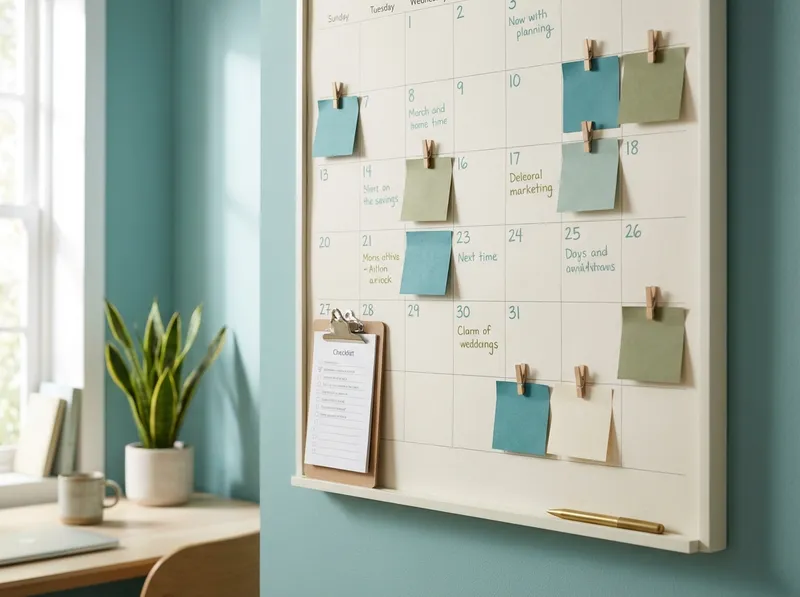
Guiding a child toward exams means training a skill that will last: getting organized, managing pressure, asking for help intelligently. When the atmosphere at home becomes clearer and more predictable, studying improves too. And often, to the surprise of parents study, confidence and dialogue improve as well.
A practical method to help children exams is to divide each subject into daily micro-goals: “chapter 3 + 10 questions,” “2-page concept map,” “20 minutes of exercises.” Micro-goals reduce anxiety because they turn a huge task into finite actions. Always include:
- Short, focused sessions (25–45 minutes) + real breaks
- Spaced review (not just “review the night before”)
- Simulations or “mock” oral exams to practice presenting
For the hardest subjects, avoid the common mistake: leaving them for last. It’s better to tackle them when energy is high (often early afternoon or weekend mornings) and alternate them with an “easier” subject so you don’t burn out. As a parent, you can contribute with a simple question at the end of the session:“What did you understand today and what’s still unclear?”. It’s a quick check that improves awareness and prevents pile-ups.
Environment, routine, and method: how to help your child study better
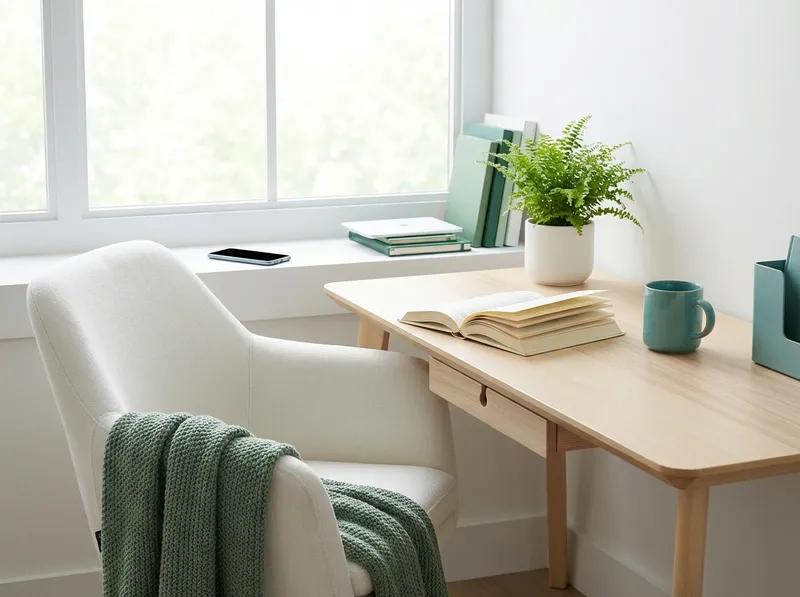
The environment doesn’t have to be perfect; it has to be consistent: same place, same materials, few interruptions. If possible, agree on a family rule: during study time, no “quick” requests (errands, conversations, notifications). The implicit message is powerful:studying is a commitment respected by everyone.
Then there’s method. Many kids “study” by rereading, but rereading creates an illusion of competence. Suggest active techniques, explaining that they help you remember better in less time:
- Recall: close the book and reconstruct the key points out loud or in writing
- Maps and outlines: to connect concepts and prepare for oral exams/presentations
- Exercises and practice tests: especially for science subjects and languages
With digital distractions, an agreement works better than a ban. Suggest a “phone parking spot” outside the room or using focus mode during sessions. And if your child studies on a PC, agree on specific windows for breaks and messages. The point isn’t to control, but to create conditions in which concentration becomes the easiest choice.
Communication and performance anxiety management: what to say and what to avoid
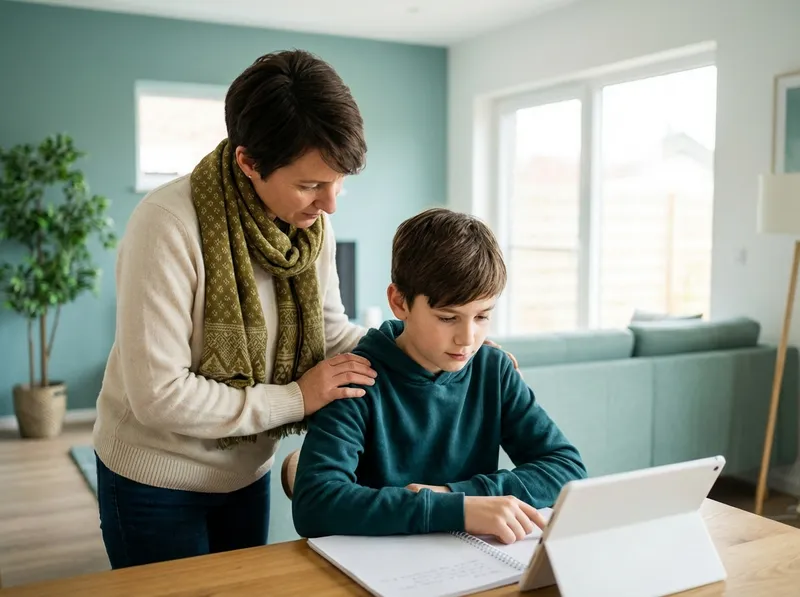
Parents’ words carry more weight during evaluation moments. The golden rule: separate the person from the performance. An exam measures a performance on one day, not your child’s worth. When you notice anxiety, avoid phrases like “You don’t need to be nervous” or “If you try hard you can do anything”: they often increase pressure and guilt. Better messages thatnormalize and orient toward action.
Here are some useful phrases (to adapt to your style):
- “It’s normal to feel tense: it means you care. Let’s look together at the next step.”
- “What would help you lower your anxiety by one point, from 7 to 6?”
- “Let’s do a 5-minute mini-simulation: then you tell me what to improve.”
Before the exam, focus on simple routines: adequate sleep, a light breakfast, materials ready the night before. If your child goes into meltdown, a quick technique is to bring them back to the present: slow breathing for 60–90 seconds and a concrete question (“What’s the first point you want to say?”). The goal isn’t to eliminate anxiety, but to turn it into useful energy:activation + direction.
Useful tools: how StudierAI can support studying and autonomy
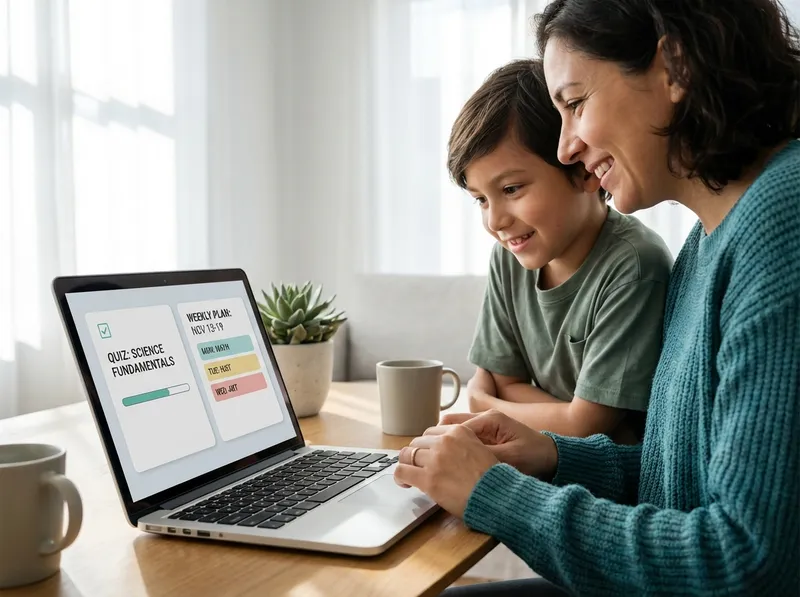
When time is short, the right tool can act as a “bridge” between confusion and clarity.StudierAIcan support daily studying with practical features: alternative explanations when a concept doesn’t get through from the book, summaries to lock in the essential points, quizzes to train recall, and planning tools to turn topics into scheduled activities. It’s particularly useful when your child studies alone and needs immediate feedback, without waiting for the next lesson or tutoring session.
The point, however, is to keep the parent’s role clear: guidance, context, encouragement. There’s no need to check every answer; there is a need to help your child ask good questions and verify what they’ve understood. An effective approach is to agree on a short “check-in” (10 minutes) at the end of the day: what was done, what’s missing, what obstacle there is. If you want to try it, you canstart for freeand test together which features truly increase autonomy and calm.
If you’d like to understand which option best fits your needs, you can also consultplans and pricing. In any case, the compass remains the same: a sustainable method, communication that protects self-esteem, and tools that enhance (not replace) studying.
Guiding a child toward exams means training a skill that will last: getting organized, managing pressure, asking for help intelligently. When the atmosphere at home becomes clearer and more predictable, studying improves too. And often, to the surprise of parents study, confidence and dialogue improve as well.