

Exam preparation isn’t just a matter of pages to review: it’s a period that tests motivation, independence, anxiety management, and organization. For many teens, pressure (internal and external) turns into procrastination, irritability, or mental blocks. For parents, instead, the temptation is to swing between two extremes: leaving them completely alone or turning into “inspectors.” In this article you’ll find practical guidance forparents study: how to understand real needs, build a sustainable plan, suggest effective techniques, and offer academic support that increases competence and confidence—without adding stress.
Understanding needs, stress, and goals: the foundation of parental support

Before talking about methods and schedules, you need a “human” diagnosis: how your child is doing, what worries them, and what goal is truly realistic. Often stress doesn’t show up as sadness, but asirritability, withdrawal, irregular sleep, headaches, loss of appetiteor phrases like “I won’t make it anyway.” In these cases, the parent’s goal isn’t to “push harder,” but to reduce confusion and increase the sense of control.
You can start with a short, concrete conversation, avoiding interrogations. Three useful questions:“What’s weighing on you the most?”, “Which part is the clearest?”, “What would be a good result for you?”. This way real needs emerge (time, method, clarifications, motivation) and you avoid imposing expectations that aren’t shared.
- Stress signals not to downplay: difficulty getting started, sudden crying, rigid perfectionism, isolation, excessive phone use to “switch off.”
- Realistic goals: better “understand and be able to explain chapters 3–5” than “study everything today.”
- Motivation: connect studying to a personal value (independence, future, satisfaction) rather than fear of the grade.
Creating a sustainable study plan (without turning into “inspectors”)
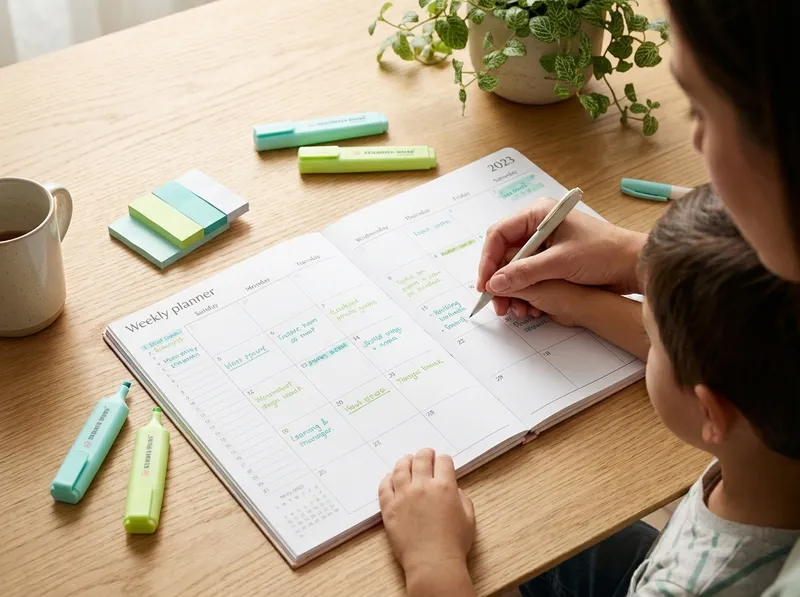
An effective plan isn’t a “perfect program,” but a system that holds up even when the day goes off track. Tohelp kids with examswithout taking control, build the calendar together: your child decides, you facilitate. The goal is for responsibility to remain theirs, while you provide structure and a calm “container.”
Practical method in 4 steps: 1) list subjects and topics; 2) estimate the time (even roughly); 3) choose priorities (what counts most, what’s hardest); 4) spread it into short sessions with breaks. A good rule is to aim for25–45 minute blocksand a real break (water, movement, no endless scrolling).
To avoid the “I check/you run away” dynamic, agree on a fixed check-in time: 10 minutes at the end of the day or end of the week. In that moment you review what worked and what didn’t, without putting anyone on trial. Language makes the difference:“What obstacle did you run into?”is better than “Why didn’t you study?”.
Study techniques that work: active review, practice, and managing distractions

Many students “study” by rereading and highlighting for hours, but in exams you need to retrieve information and reason. The most effective strategies are those ofactive review: they put the brain in a position to remember and apply, not just recognize.
- Quizzes and questions: after a chapter, create 5–10 questions and answer without looking at your notes.
- Explaining out loud (the “teacher” effect): go over the topic as if explaining it to a classmate or to you.
- Exercises and simulations: 30 minutes of targeted practice is better than 2 hours of passive reading.
- Mind maps and outlines: useful if built after understanding, not as a copy of the book.
For digital distractions, the best approach is to “design the environment”: phone out of the room or in a drawer, notifications off, blocking apps during study blocks. As a parent, you can propose a family pact: you also reduce interruptions (non-urgent calls, TV in the background) to show consistency and respect for study time.
The parent’s role during preparation: communication, motivation, and conflict management

The best academic support isn’t doing it for them, but creating the conditions for them to succeed. This means: listening, clear boundaries, and reinforcing progress. When your child is struggling, avoid absolute statements (“You never put in effort”) and prefer observable feedback:“I’ve noticed you’re having trouble getting started: let’s try breaking it down into a first 10-minute step”.
For motivation, it works better to reward the process than the result: “You stuck to the plan for three days” matters more than “You got an 8.” And when conflict arises (procrastination, lying about studying, angry outbursts), try shifting the focus from judgment to solutions: “What’s the smallest thing we can do right now?”. If needed, agree on clear but proportionate consequences (e.g., no video games before the session) avoiding humiliating punishments.
A good indicator is this: after an interaction with you, does your child feel more capable or more under examination? If the answer is “under examination,” reduce the frequency of checks and increase supportive questions. When in doubt, a steady but light presence is better than intense interventions only when “it’s too late.”
When extra help is needed: tutors, school, and how StudierAI can support studying

Sometimes effort isn’t enough: external help is needed. Consider involving teachers or a tutor when you see persistent gaps, anxiety that blocks studying, difficulties with method (they don’t know where to start), or when family conflicts turn studying into a battlefield. A conversation with the school can clarify expectations, grading criteria, and truly priority materials.
At the same time, well-chosen digital tools can make organization and active review easier.StudierAIcan help your child turn materials and notes into practical study resources: create summaries, generate quizzes to train retrieval, and track progress more clearly. It’s also useful for building a realistic plan and revisiting it over time, so preparation doesn’t boil down to a last-minute sprint.
If you want to try it with your child, you canstart for freeand then evaluate the most suitable solution by checkingplans and pricing. The goal isn’t “study more,” but study better: less anxiety, more clarity, more independence.
In summary: parental support works when it combines empathy and structure. Understanding stress and needs, building a sustainable plan, using active techniques, and communicating constructively creates a context in which your child can face exams with more competence and calm. Your role is to be a secure base: present, consistent, and solution-oriented.