

Micro-goals: 25–45 minute sessions with a clear objective (“3 exercises,” “2 paragraphs”), followed by short breaks.student mental health 2026Sleep hygiene: regular schedules, low light in the evening, no extreme catch-up sleep on weekends. Sleep is “invisible studying.”
Quick anti-anxiety techniques: slow breathing (e.g., 4–6), 5-4-3-2-1 grounding, brief muscle relaxation before oral exams.
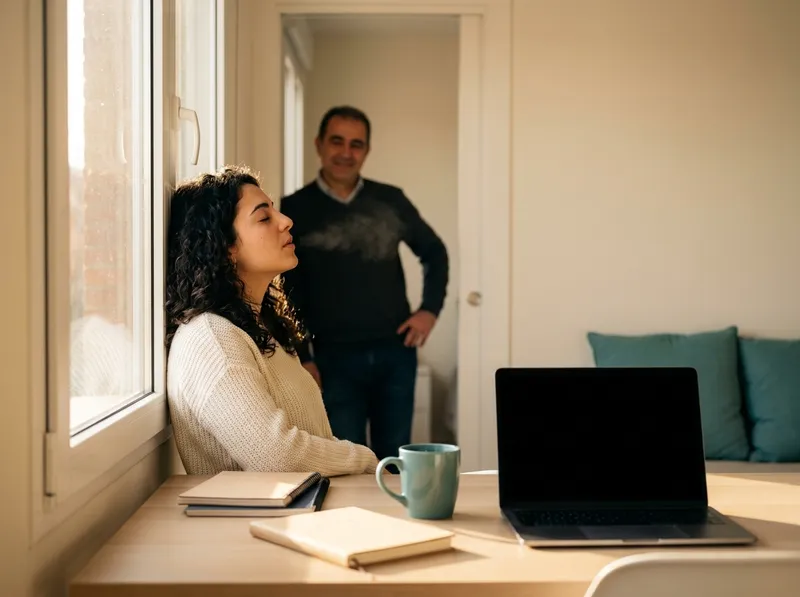
Here AI is useful because it turns good intentions into a sustainable schedule: it suggests study blocks, alternating subjects, spaced reviews, and recovery time. This is particularly effective forexam stress AI: when anxiety rises, the mind tends to catastrophize; a visible, realistic plan reduces uncertainty. As a parent, you can ask to see only the plan (not personal details), and support with simple questions: “What’s today’s micro-goal?” and “What break did you schedule?”recognize earlyStudierAI: how it can help parents and students manage stress and studying (with clear boundaries)
Tools likeStudierAIcan become an “organizational coach” that eases tension in the family: fewer arguments about “how much” to study and more clarity about “how” to study. The value, for parents, isn’t to replace the student, but to create a context where autonomy and support coexist.
Signs of stress, performance anxiety, and burnout risk: a practical at-home checklist
Pre-exam stress can be “normal” if it’s temporary and improves with rest. It becomes a warning sign when it lasts for weeks, worsens despite effort, or leads to avoidance and isolation. Here’s a simple (non-diagnostic) checklist to spotWorkload monitoring: if a week is too packed, AI helps redistribute it. This reduces the risk of a “crash” right before oral exams or the final exam.and burnout risk.
- Emotional indicators: irritability, easy crying, apathy, guilt over “deserved” breaks, intense fear of disappointing others.
- Cognitive indicators: rumination (“I won’t make it”), difficulty concentrating, blanking out during a test, paralyzing perfectionism.
- start for free
- sign up for free
who we are.: listening, routine, boundaries, and—when needed—a bridge to professionals.
How to use AI safely to monitor psychological well-being (without invading privacy)
AI can be an ally when it helps you see patterns that are easy to miss: sleep hours dropping, studying shifting only to nighttime, breaks disappearing, mood worsening on oral-exam days. In practice, AI-based tools can support: (1)organization(realistic plans), (2)self-awareness(check-ins on energy and stress), (3)healthy reminders(breaks, hydration, sleep schedules). This is different from “surveillance”: the goal is for the student to learn to self-regulate, not to feel controlled.
Practical guidelines for safe use:
- Consent: agree together on what is tracked (e.g., study hours) and what isn’t (messages, personal content).
- Data minimization: better a few useful indicators (sleep, workload, breaks) than total monitoring.
- Transparency: the student must be able to see the same data and use it to decide, not be subjected to it.
- Limits: AI doesn’t diagnose. If significant insomnia, panic attacks, self-harm, or marked withdrawal appear, a professional is needed.
When should monitoring be avoided? If the teen experiences it as intrusive, if it increases conflict, or if it becomes an obsession (“today I studied less, so I’m worth less”). In these cases it’s better to use AI only for planning and building habits, keeping personal data out of the parent-child relationship.
Exam preparation with evidence-based techniques: AI-supported anti-anxiety and anti-procrastination plans
When studying is chaotic, anxiety grows. When studying is structured, anxiety tends to become manageable. Some strategies are well supported by research and work both in high school and at university:
- Spaced repetition: reviews distributed over time, instead of last-week “marathons.”
- Practice testing: simulations and questions, not just rereading. It measures what you truly know and reduces the “illusion of competence” effect.
- Micro-goals: 25–45 minute sessions with a clear objective (“3 exercises,” “2 paragraphs”), followed by short breaks.
- Sleep hygiene: regular schedules, low light in the evening, no extreme catch-up sleep on weekends. Sleep is “invisible studying.”
- Quick anti-anxiety techniques: slow breathing (e.g., 4–6), 5-4-3-2-1 grounding, brief muscle relaxation before oral exams.
Here AI is useful because it turns good intentions into a sustainable schedule: it suggests study blocks, alternating subjects, spaced reviews, and recovery time. This is particularly effective forexam stress AI: when anxiety rises, the mind tends to catastrophize; a visible, realistic plan reduces uncertainty. As a parent, you can ask to see only the plan (not personal details), and support with simple questions: “What’s today’s micro-goal?” and “What break did you schedule?”
StudierAI: how it can help parents and students manage stress and studying (with clear boundaries)
Tools likeStudierAIcan become an “organizational coach” that eases tension in the family: fewer arguments about “how much” to study and more clarity about “how” to study. The value, for parents, isn’t to replace the student, but to create a context where autonomy and support coexist.
Examples of use cases with clear boundaries:
- Weekly planning: the student enters subjects and deadlines, AI proposes realistic blocks with reviews; the parent sees only the structure (if agreed).
- Workload monitoring: if a week is too packed, AI helps redistribute it. This reduces the risk of a “crash” right before oral exams or the final exam.
- Routine and well-being: reminders for breaks, sleep, and light physical activity, without judgment and without “monitoring” personal content.
- Final exam/university prep: simulations, micro-goals, and spaced reviews; useful for maintaining consistency and lowering performance anxiety.
If you want to try it in a light-touch way, you canstart for freeorsign up for free, and clarify the rules of use within the family: what is shared, for how long, and with what goal (e.g., reducing stress, not increasing control). To understand the project’s philosophy and approach, you can also consultwho we are.
Finally, a simple criterion: if stress prevents sleeping, eating, attending school, or maintaining relationships, don’t wait for it to “pass.” AI is an organizational and awareness support, but the decisive step remains human: a calm conversation, a sustainable study agreement, and—when necessary—the involvement of a psychologist, doctor, or school services. In 2026 the priority isn’t just making it to the exam: it’s making it there with resources, confidence, and health.
