Short sessions and reminders: useful when studying between trips (relatives’ house, second home) or when mental energy is low.StudierAIModular simulations: small tests (10–15 questions) instead of the “long simulation,” to build consistency and reduce anxiety.adaptive studyIf you want to try it with no commitment, you canstart for freeand see in a few days whether the method reduces stress and arguments. To learn more about the philosophy and the project, also take a look at
.

Checklist for parents: safety, well-being, and productivity (without conflicts)extreme weather eventsWhen the situation is unstable, a checklist prevents you from improvising every day. Here’s an operational list, designed to reduce friction and keep results realistic.focusStudy environment: choose the coolest and quietest spot; adequate light; a comfortable chair; everything you need within reach to avoid constant “getting up.”routineHydration and breaks: water always visible; scheduled short breaks; light snacks. In extreme heat, 3 short sessions are better than one long one.accessClear digital rules: notifications off during study; phone far away if it distracts; but keep channels open for school communications and alerts.
Communication with teachers: if there are forced absences or objective difficulties, write early and concretely (what’s missing, what can be turned in, when).making the family–study system safeMaterials backup: photos or PDFs of important pages; shared cloud folder; list of books/notebooks; charged power bank in case of power outages.study organizationMonitoring without pressure: ask “what’s the next micro-goal?” instead of “how much is left?”; celebrate consistency; review the plan every evening in 5 minutes.
study organization
sign up for freeand test a more resilient approach, suitable for parents and students.is a method: you start from real conditions (time, energy, place, access to materials) and build a “good enough” plan that can withstand the unexpected. For many kids, a 4-step replanning, simple and repeatable every 24 hours, works well.
- Define 2–3 daily micro-goals (e.g., “review 15 minutes of science + 10 math exercises + 1 page of summary”).
- Move studying to the most favorable windows: early morning or evening, when it’s cooler and the mind is more responsive.
- Alternate high- and low-load activities: reading/summary (medium) → short exercises (high) → review with flashcards (low).
- Schedule recovery and decompression: hydrating breaks, a cool shower, 10 minutes of movement, and a “soft” end to the day to reduce stress and conflict.
Quick examples. Middle school: if the afternoon is unbearable because of the heat, better 2 sessions of 20 minutes in the morning (Italian + math) and 15 minutes in the evening for light review. High school: if a week is broken up by closures or travel, focus on “bare essentials”: exercises on topics with a high likelihood of being tested, targeted review of mistakes, and a short simulation on the weekend. The message to your children is:we’re not lowering the bar, we’re making it sustainable.
How Artificial Intelligence can make studying resilient during emergencies and unexpected events
When time and attention are limited, Artificial Intelligence is especially useful because it helps youdecide what to do firstand how to distribute effort. In practice, a good AI system can: personalize a plan based on subjects, deadlines, and level; estimate cognitive load (how many “heavy” tasks to put on the same day); propose targeted reviews on weak points; create questions, exercises, and exam simulations also in short format, so you can study “in modules” when you can.
For parents, this translates into two advantages: less time spent rebuilding the plan every time the day falls apart, and more clarity in the dialogue (“today we’ll do 2 small but important goals”). Also, if access to books or photocopies is partial, AI can help turn available notes and content into review activities, maintaining continuity even in less-than-ideal conditions.
StudierAI in practice: study plans and exam simulations that adapt to heat, closures, and travel
WithStudierAIthe idea is to bring adaptive study into a guided flow: you enter goals, constraints, and deadlines and the system helps build a sustainable path. During a heat wave, for example, you can set shorter, more frequent sessions (15–25 minutes) and concentrate the most demanding tasks in the cool hours. If a school closes due to bad weather, automatic rescheduling helps you not lose the thread: the plan updates, highlighting what is truly a priority.
Concrete use cases for families:
- Rescheduling after an unexpected event: “no afternoon today” → the plan redistributes over 2–3 days, without turning everything into marathons.
- Priorities across subjects: more weight to upcoming tests, difficult topics, and cumulative skills (math, languages), without neglecting light review.
- Short sessions and reminders: useful when studying between trips (relatives’ house, second home) or when mental energy is low.
- Modular simulations: small tests (10–15 questions) instead of the “long simulation,” to build consistency and reduce anxiety.
If you want to try it with no commitment, you canstart for freeand see in a few days whether the method reduces stress and arguments. To learn more about the philosophy and the project, also take a look atwho we are.
Checklist for parents: safety, well-being, and productivity (without conflicts)
When the situation is unstable, a checklist prevents you from improvising every day. Here’s an operational list, designed to reduce friction and keep results realistic.
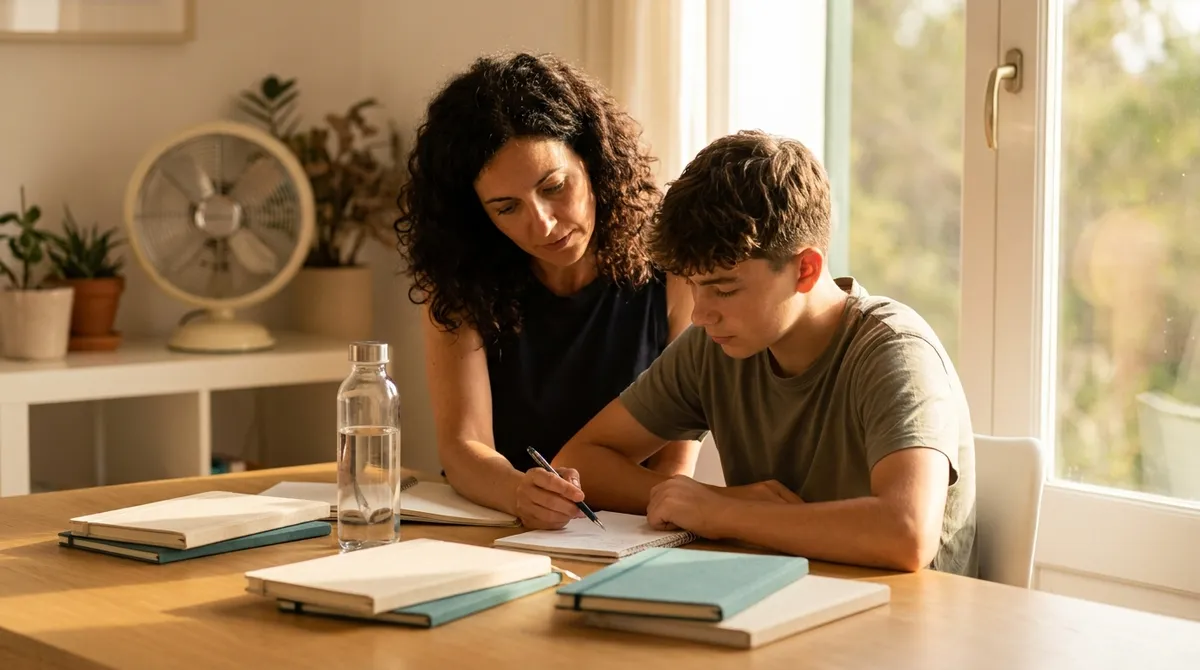
- Study environment: choose the coolest and quietest spot; adequate light; a comfortable chair; everything you need within reach to avoid constant “getting up.”
- Hydration and breaks: water always visible; scheduled short breaks; light snacks. In extreme heat, 3 short sessions are better than one long one.
- Clear digital rules: notifications off during study; phone far away if it distracts; but keep channels open for school communications and alerts.
- Communication with teachers: if there are forced absences or objective difficulties, write early and concretely (what’s missing, what can be turned in, when).
- Materials backup: photos or PDFs of important pages; shared cloud folder; list of books/notebooks; charged power bank in case of power outages.
- Monitoring without pressure: ask “what’s the next micro-goal?” instead of “how much is left?”; celebrate consistency; review the plan every evening in 5 minutes.
In summary: extreme events require a change in mindset. Withstudy organizationflexibility, small goals, and tools that automate replanning, school remains manageable even when the routine breaks down. If you want to start right away, you can alsosign up for freeand test a more resilient approach, suitable for parents and students.
