In 2026, studying is no longer just “read and repeat.” Between fast-paced lessons, dense syllabi, and fragmented attention, many students are looking for a method that truly works in little time. This is wheremultisensory learningcomes in: using multiple channels (sight, hearing, touch/action) to understand better and remember longer. Tools likeStudierAIare making this strategy practical and measurable, with flashcards and adaptive quizzes designed forstudent studyandadvanced memorization. In this article you’ll find the key principles and a 20-minute routine for tests and exams, fully in line witheducational technology 2026.
Why multisensory learning has become indispensable in 2026
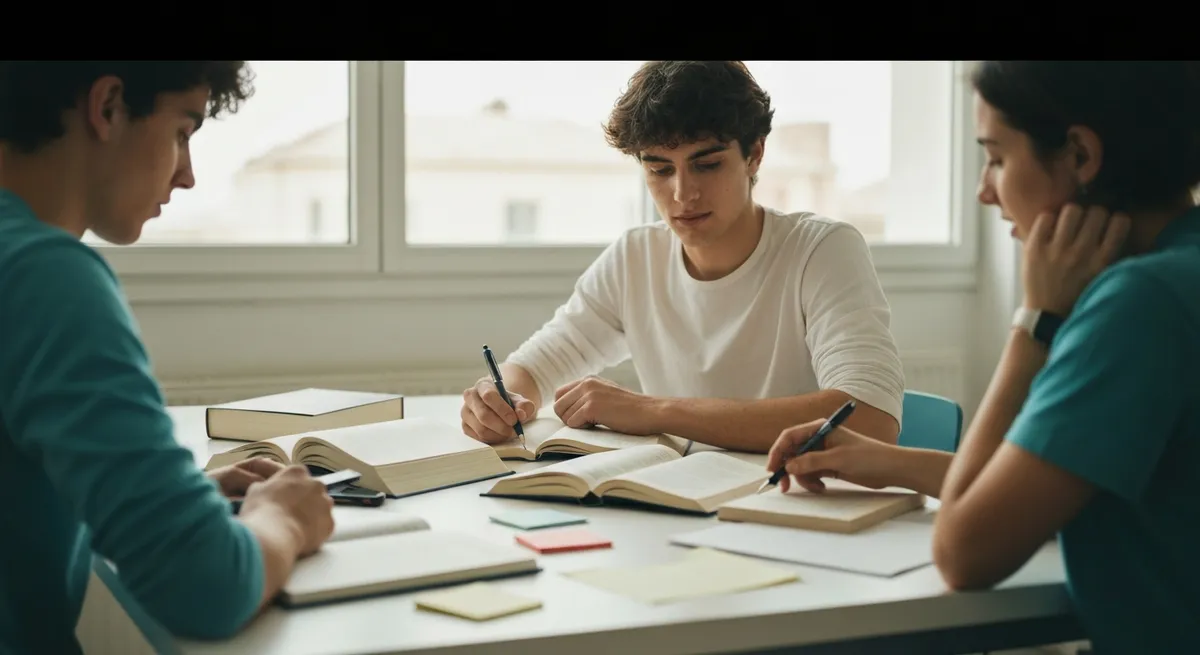
When you study only by reading, you’re relying most of the work on a single channel. In 2026, instead, the complexity of the content and the speed at which you have to prepare it reward those who can create more mental “hooks.”multisensory learningdoes exactly that: it integratessight,hearingandtouch/action(writing, manipulating, responding) to increase attention, understanding, and recall. The result is more stable learning: if one channel “drops out” (fatigue, distractions, exam anxiety), the others support memory.
For intensive studying, this approach is particularly useful because it turns study time into real information-retrieval time. Looking at a concept (sight), listening to an explanation or rephrasing it out loud (hearing), and then using it in an exercise or a quiz (action) creates a complete circuit: you understand, you apply, you check. It’s also a practical antidote to the “false sense of security” typical of rereading: it feels like you know it, but you still can’t recall it.
How multisensory learning works: practical principles for students
To apply it well you don’t need to “do a thousand things”: you need to choose activities that activate specific mechanisms. Three are the most important for high school and university:dual coding,deep processingandactive recall. Dual coding means pairing words with images/structures: you don’t need to be an artist, you just need to turn a paragraph into a diagram, a table, a minimal concept map. Deep processing is what happens when you connect a concept to a why, to an example, or to a typical mistake. Active recall, finally, is the ability to pull information out without looking: quizzes, questions, flashcards, explaining out loud.
Practical translation: if you’re preparing history, don’t just read. Make a mini timeline (sight), tell it in 60 seconds as if it were a podcast (hearing), and then answer 5 questions without notes (action). If you study math or physics, alternate definitions (sight) with brief spoken explanations (hearing) and above all targeted exercises (action), because procedural memory is built by doing.
- Sight: turn notes into diagrams, keywords, consistent colors (always the same ones for categories).
- Hearing: rephrase out loud, record a 1-minute audio per chapter, or explain it to a classmate.
- Touch/Action: handwrite the key steps, solve exercises, do timed quizzes, use flashcards with the answer hidden.
The golden rule is simple: every session must include at least one moment ofactive recall. If by the end of studying you’ve never “tested yourself,” you’re still in the exposure phase, not the consolidation phase.
StudierAI: personalized flashcards and quizzes to stimulate multiple senses at the same time
In aeducational technology 2026context, the difference isn’t just “having content,” but having a system that guides you in how you review it.StudierAIaims precisely at this: using flashcards and quizzes to move you quickly from reading to retrieval, with sessions built to supportmultisensory learning.
Here’s how it can support a more sense-“rich” session and one that’s more effective foradvanced memorization: flashcards force you to see a question (sight) and produce an answer (action). If you add rephrasing the answer out loud or a 10-second explanation (hearing), you complete the multisensory triangle. Adaptive quizzes then increase or decrease difficulty and repetitions based on what you get wrong: this makes studying more targeted, reduces time wasted on what you already know, and focuses energy on weak points.
Personalization is also useful for another reason: it helps you change perspective on the content. Not only “definition → answer,” but also “example → concept,” “typical mistake → correction,” “multiple-choice question → why the other options are wrong.” This kind of variation increasesdeep processingand makes recall more robust during a test.
If you want to try a guided approach, you canstart for freeand build a first review set. And if you’re interested in understanding the project’s philosophy and how it began, take a look atwho we are.
20-minute multisensory study routine: an example for tests and exams
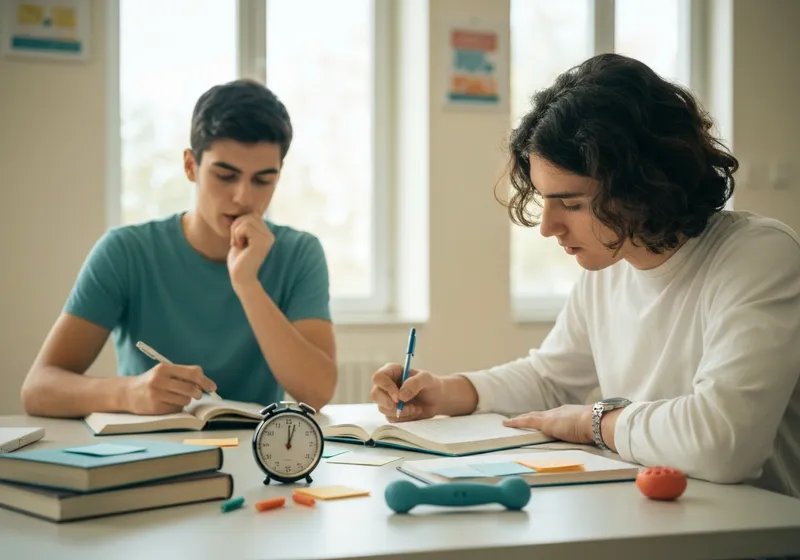
This micro-routine is designed to be repeatable every day, even when you have little time. It works well on a single topic (a philosophy paragraph, a physics law, a set of vocabulary, a short chapter). Goal: move from exposure to testing in 20 minutes, with immediate feedback.
- 0–2 minutes (Setup): choose 1 measurable goal. Example: “Answer correctly 12/15 questions on topic X” or “explain the concept in 60 seconds without notes.”
- 2–10 minutes (Multisensory study): read or look over your notes and turn them into 5–7 key points (sight). Then rephrase each point out loud in a simple sentence (hearing). If you can, handwrite 3 keywords per point (action).
- 10–16 minutes (Test): do a quick quiz or flashcards without looking at the answers. Keep a pace: 20–30 seconds per question. Mark only “ok / almost / no.” This is the core of active recall.
- 16–20 minutes (Smart review): for each “no,” write a one-line correction and create a new question that forces you not to repeat the same mistake. If the problem is confusion between similar concepts, create a comparison question (“Difference between A and B?”).
Recommended materials: timer, notebook or sheet of paper, highlighter (just one), and a set of flashcards/quizzes. If you use an app, ideally it should let you review adaptively: reduce randomness and increase precision. With this in mind you can alsosign up for freeand set up short but frequent sessions, which in the long run beat pre-exam marathons.
Simple metrics to measure progress (without making your life complicated): percentage of “ok” answers in the test, number of repeated errors (it should go down), and average time to answer. If after 3–4 sessions the same error remains, it’s not a “lack of memory”: it’s a comprehension problem. In that case, go back to deep processing: one more example, a comparison, a clearer spoken explanation.
In 2026, studying well means studying smarter: less passive, more testable, more multisensory. With a short routine and the right tools, you can make your preparation consistent and arrive at tests and exams with a more ready and reliable memory.