
Artificial intelligence isn’t a magic wand, but it can become a real ally for studying better: it helps you turn passive material (notes, PDFs, slides) into active exercises, plan more clearly, and get immediate feedback. In this article you’ll find the bestAI study techniquesfor students, with practical examples and astudy methodthat’s sustainable and integrates AI, review, and productivity.
Why AI is changing the way we study (and what it can really do)
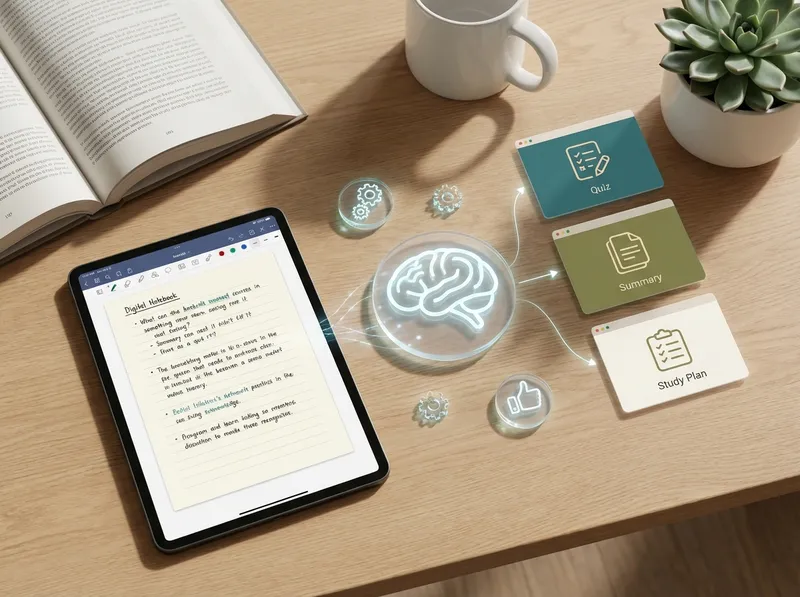
When we talk aboutstudying with artificial intelligence, the point isn’t “having it do your homework,” but improving the process: understanding sooner, remembering better, and staying organized with less stress. AI can personalize studying by adapting difficulty and pace, give immediate feedback on answers and reasoning, summarize long content, and turn it into exercises. In practice, it speeds up the mechanical part and leaves you more energy for understanding.
Realistic expectations: AI doesn’t “know” whether something is true just because it sounds convincing. It can be wrong, oversimplify, or make up details. That’s why it’s essential to use aquality controlapproach: compare with the textbook/handouts, ask for sources or references, and verify with exercises. If you treat it like a tutor that suggests paths (not like an oracle), it becomes genuinely useful.
AI study techniques: active review, flashcards, and personalized quizzes

The most effective techniques aren’t the ones that make you “reread,” but the ones that force you to retrieve information from memory. This is whereretrieval practice(active review) andspaced repetitioncome in. AI can create tailored questions from your notes, generate flashcards with concise answers, and build adaptive quizzes that focus on your mistakes.
A simple workflow: take a chapter, ask AI to extract key concepts and turn them into 20 mixed questions (true/false, short answer, multiple choice). Then take the test without looking at the text. Finally, ask for a reasoned correction: not just “right/wrong,” butwhyyou got it wrong and which step you’re missing.
To make flashcards truly effective, use these rules (AI can help you stick to them):
- One idea per card (avoid overly long questions).
- Short, verifiable answer (definition, formula, numbered steps).
- Add a minimal example (when needed) to lock in how the concept is used.
- Create question variants (definition → application → typical mistake).
A study method with artificial intelligence: summaries, concept maps, and tailored explanations
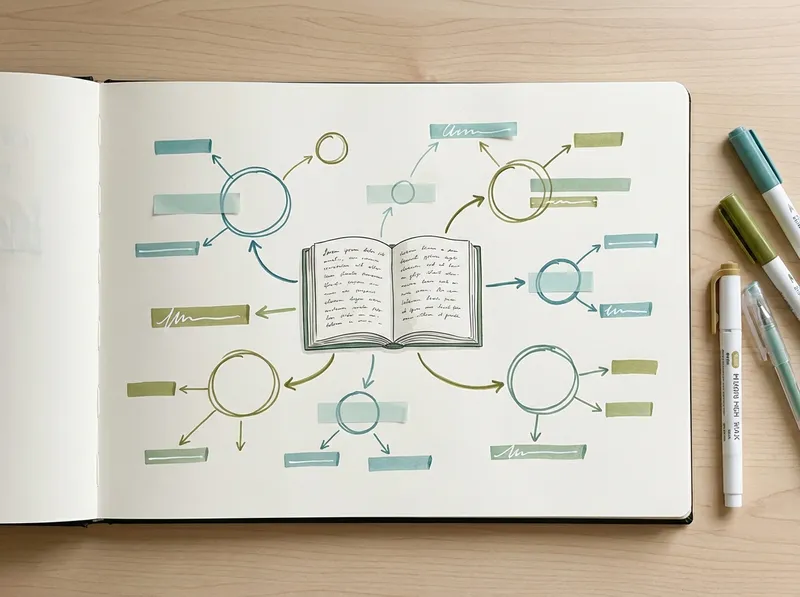
Summarizing doesn’t mean shortening: it meansselectingwhat matters and connecting it. A good method is to ask AI for two different outputs: (1) a “review” summary in 10–15 lines with keywords, (2) a hierarchical outline with headings, subheadings, and essential points. Then use the outline to build a concept map: concepts (nodes) + relationships (verbs).
The most powerful part is the tailored explanation. If a topic won’t click, rereading it ten times doesn’t help: ask for a layered explanation. For example: “Explain it to me like I’m a beginner” → “Now like I’m an advanced student” → “Give me a guided exercise” → “Give me 3 typical mistakes and how to avoid them.” This step turns AI into a tutor that adapts the language to your starting point.
To check understanding, use a simple rule: if you can explain a concept with a new example, you’ve understood it. Ask AI to generate 2–3 examples in different contexts and then try solving them yourself. Finally, have it “quiz” you with open-ended questions: it’s a quick way to uncover gaps and ambiguities in your notes.
Planning and productivity: creating a smart and sustainable study plan

A plan works when it’s realistic. AI can help you estimate time and workload, but you need a structure: goal → micro-task → sessions. Instead of writing “study chapter 5,” break it into measurable actions: “read 10 pages,” “do 15 quizzes,” “write 5 flashcards,” “review mistakes.” This reduces procrastination and gives you a clear sense of progress.
A smart study plan alternates subjects and types of activities: understanding (reading/explanation), production (exercises), consolidation (review). Ask AI to propose a rotation that avoids sessions that are too long on the same thing and includes short reviews spaced 1, 3, 7 days apart. It’s the simplest way to integrate memory techniques without complicating your life.
To prevent burnout, schedule buffers: “cushion” days, short breaks every 50–60 minutes, and a weekly check-in. AI can also suggest a maximum daily workload (e.g., 2 intense blocks + 1 light one) and remind you not to confuse hours studied with quality: 90 minutes of active review is better than 3 hours of passive rereading.
StudierAI: how it can help you study better (with usage examples)
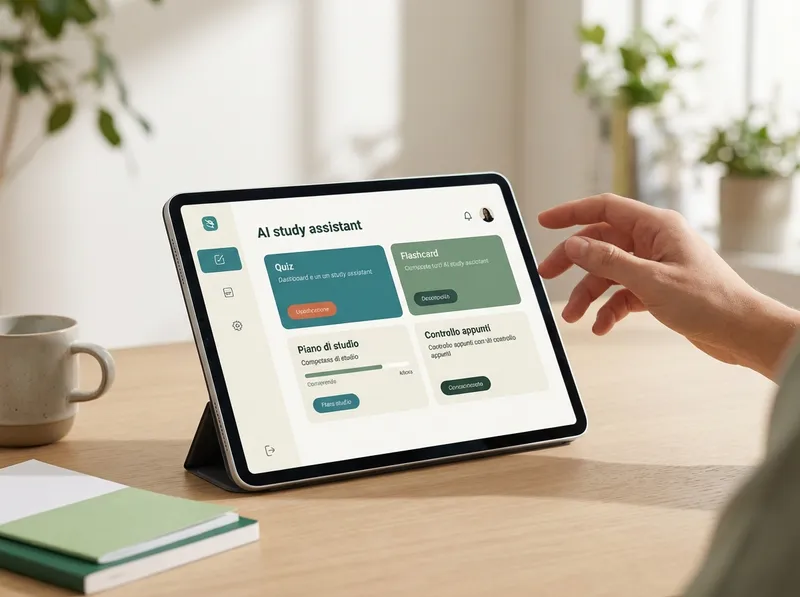
If you want to apply these ideas in an organized way,StudierAIcan support you at four key moments: turning material into quizzes/flashcards, getting guided explanations, creating study plans, and doing quality control on your notes. The goal is to make yourstudy methodmore active and measurable, without wasting time “making up” exercises on your own.
Here are examples of prompts and workflows you can replicate (adapting them to your subjects too):
- Personalized quiz: “From these notes, create 25 questions: 10 short answer, 10 multiple choice, 5 practical cases. Also indicate the difficulty and explain the most common mistakes.”
- Flashcards for spaced repetition: “Generate 30 flashcards (Q/A) with answers within 2 lines, include 5 cards on typical mistakes and 5 on application.”
- Tailored explanation: “Explain this concept at 3 levels (basic, intermediate, advanced). Then give me 2 exercises with a guided solution and 1 without a solution.”
- Study plan: “I have 14 days, 3 hours a day, these chapters and these goals. Create a calendar with micro-tasks, 1-3-7 day reviews, and a final assessment.”
If you want to try a complete flow right away (material → quiz → review → plan), you canstart for freeand then evaluate the options available on theplans and pricingpage. The important thing is to start with one rule: AI must increase your active study time, not replace it. That wayAI study techniquesbecome a real advantage in oral exams, tests, and final exams.