
A step that’s often underestimated is theguided correction of mistakes. After a quiz, don’t stop at the score: paste the wrong answers and ask it to classify the error (distraction, unclear definition, missing logical step, misapplied formula) and to propose 2 targeted exercises for that type of error. That way review becomes training, not repetition.studying with artificial intelligenceFinally, preparerealistic exam simulations: limited time, clear instructions, grading criteria. Also ask for a self-assessment rubric (completeness, accuracy, clarity, examples) to understand what to improve before the exam session.
Planning your study method with AI: goals, time, and tracking

A goodstudy methodisn’t “studying a lot,” but studying with priorities and consistency. AI can help you build a realistic weekly plan starting from: exam dates, amount of material, available hours, and current level. A useful trick is to ask for a time estimate per unit (e.g., 10 pages of theory, 20 exercises) and then compare it with your experience: after 2–3 days, adjust the estimates and make the plan more and more accurate.organizationTo work, the plan must be broken down into small, verifiable tasks: “chapter 3” is too vague; better “read and annotate definitions,” “create 15 flashcards,” “do 25 exercises,” “45-minute simulation.” Ask the AI to turn a big goal into a checklist and to include recovery blocks (buffer) for unexpected events.motivationTracking is what distinguishes a “nice” plan from a useful plan. Every 2–3 days, do a mini-report: what I completed, what I postponed, why, and what the next step will be. AI can suggest adjustments: reduce workload, change the order of topics, increase practice if mistakes are repetitive. The goal isn’t to follow the plan perfectly, but
.dependencyStudierAI in practice: a complete study flow (from lecture to exam)errors or hallucinations(plausible but incorrect answers) andLet’s put everything together into a concrete flow. WithStudierAIyou can turn your notes into study-ready materials and keep review and progress under control. Here’s a “from lecture to exam” workflow you can replicate every week., not to avoid it.
- Always verify: ask for sources, compare with the textbook/notes, and ask control questions (“why?”, “in which cases doesn’t it apply?”).
- Protect your data: avoid names, student ID numbers, documents; if you upload notes, remove personal information and use privacy settings when available.
- Keep the “right” amount of effort: try first yourself (2–5 minutes), then ask the AI to unblock you with a hint, not with the full solution.
AI study techniques to understand better: explanations, examples, and concept maps
If you want to try this approach in a structured way, you canstart for freeand build your study flow with organized materials and reviews. When you want to figure out which option is right for you, take a look at
. The most important thing remains one: use AI to increase the quality of practice. That’s where grades really change.“Give 3 progressive examples”: easy, medium, hard. This helps you gradually build intuition and competence.
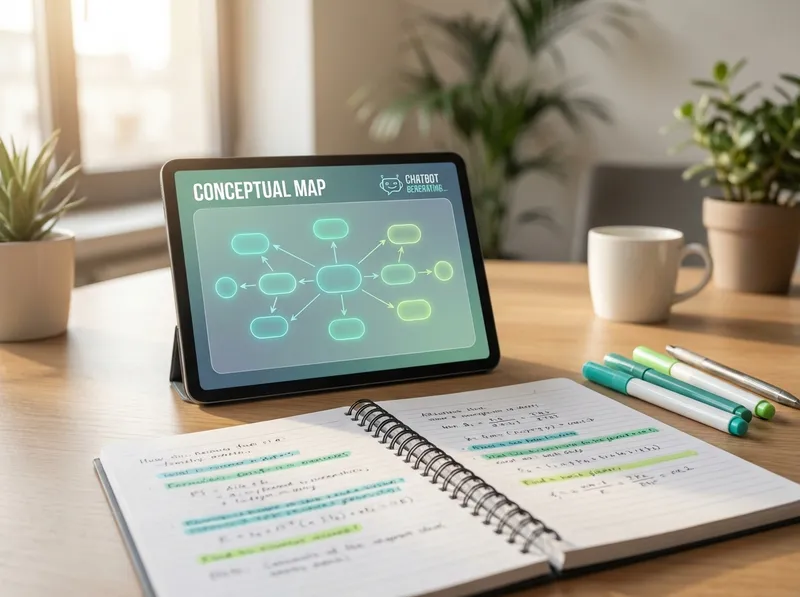
Another powerful technique is theguided concept map. Ask it to extract key concepts, cause-and-effect relationships, definitions, and formulas, and to organize everything into a tree structure. Then do a verification pass: “Indicate which links are hypotheses and which are explicitly in the text.” This way you reduce the risk of invented connections.
Finally, use summaries in an “active” way: instead of asking only for a summary, ask for achecked summarywith: a list of indispensable concepts, 5 verification questions, and 3 common mistakes. If you can’t answer the questions, the summary isn’t yours yet.
Memorization and review with AI: flashcards, quizzes, and spaced repetition

Understanding is necessary, but to do well on exams you also need to remember and retrieve information quickly. Here AI can generate practice materials in a few minutes:flashcards, multiple-choice quizzes, open-ended questions, and mini-cases. The important part is quality: a good flashcard has a clear question and a short answer, with an example or an exception when needed.
For memorization, integratespaced repetition: reviews at increasing intervals, focusing on what you get wrong. You can ask the AI to propose a sample schedule (e.g., day 1, 3, 7, 14) and to recalibrate the intervals based on your mistakes.
A step that’s often underestimated is theguided correction of mistakes. After a quiz, don’t stop at the score: paste the wrong answers and ask it to classify the error (distraction, unclear definition, missing logical step, misapplied formula) and to propose 2 targeted exercises for that type of error. That way review becomes training, not repetition.
Finally, preparerealistic exam simulations: limited time, clear instructions, grading criteria. Also ask for a self-assessment rubric (completeness, accuracy, clarity, examples) to understand what to improve before the exam session.
Planning your study method with AI: goals, time, and tracking
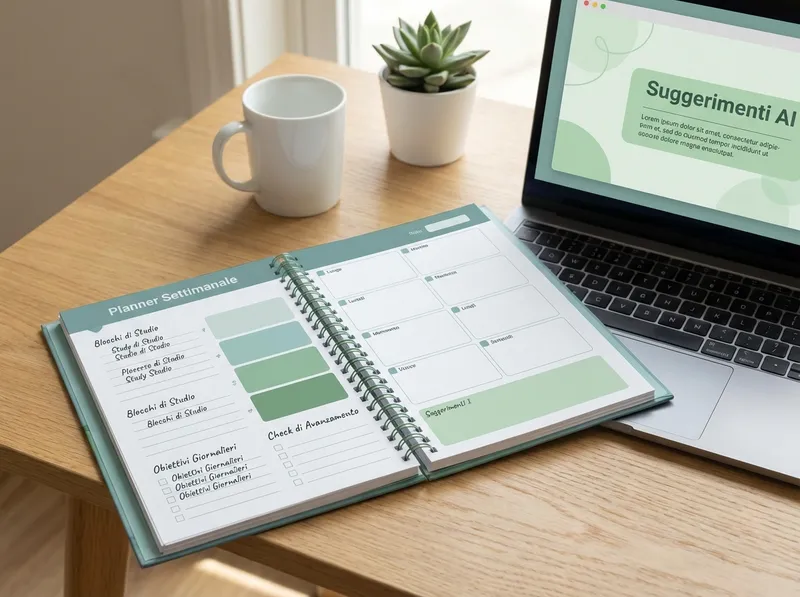
A goodstudy methodisn’t “studying a lot,” but studying with priorities and consistency. AI can help you build a realistic weekly plan starting from: exam dates, amount of material, available hours, and current level. A useful trick is to ask for a time estimate per unit (e.g., 10 pages of theory, 20 exercises) and then compare it with your experience: after 2–3 days, adjust the estimates and make the plan more and more accurate.
To work, the plan must be broken down into small, verifiable tasks: “chapter 3” is too vague; better “read and annotate definitions,” “create 15 flashcards,” “do 25 exercises,” “45-minute simulation.” Ask the AI to turn a big goal into a checklist and to include recovery blocks (buffer) for unexpected events.
Tracking is what distinguishes a “nice” plan from a useful plan. Every 2–3 days, do a mini-report: what I completed, what I postponed, why, and what the next step will be. AI can suggest adjustments: reduce workload, change the order of topics, increase practice if mistakes are repetitive. The goal isn’t to follow the plan perfectly, butadapt it to the results.
StudierAI in practice: a complete study flow (from lecture to exam)
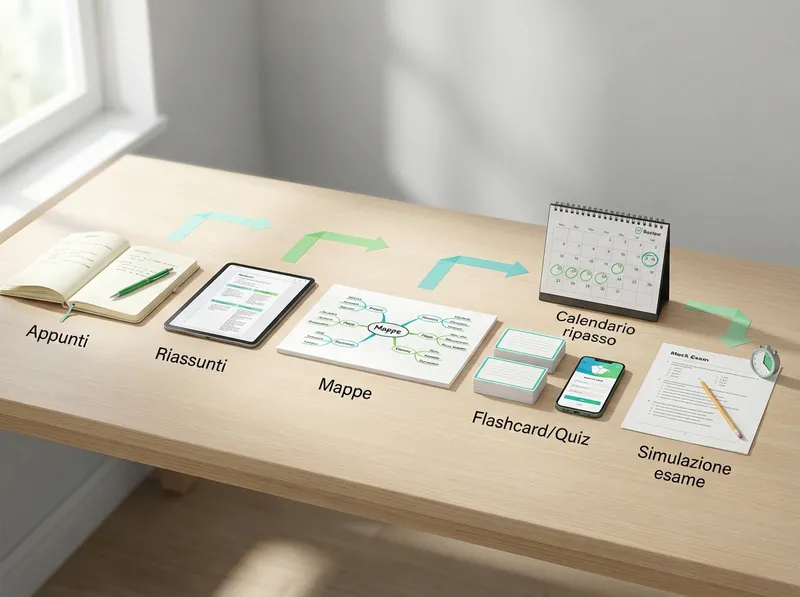
Let’s put everything together into a concrete flow. WithStudierAIyou can turn your notes into study-ready materials and keep review and progress under control. Here’s a “from lecture to exam” workflow you can replicate every week.
- After the lecture (within 24 hours): clean up your notes and ask for a reorganization into key points, definitions, and control questions. Goal: make the material “studyable.”
- Understanding: generate a concept map and then ask for 3 progressive examples for the most difficult concepts. If something doesn’t add up, ask “anti-error” questions (conditions, exceptions, limits).
- Memorization: create personalized flashcards and quizzes. Start from definitions and then move to application questions (exercises, cases, “what happens if…”).
- Scheduled review: set short, frequent sessions with spaced repetition. Focus on the “hard” cards and record typical mistakes so you don’t repeat them.
- Pre-exam (7–10 days): do full simulations with a timer and guided correction. Turn every mistake into 2 targeted exercises and 1 “watch out” flashcard.
If you want to try this approach in a structured way, you canstart for freeand build your study flow with organized materials and reviews. When you want to figure out which option is right for you, take a look atplans and pricing. The most important thing remains one: use AI to increase the quality of practice. That’s where grades really change.