

Using artificial intelligence to study doesn’t mean “having it do your homework for you,” but enhancing yourstudy method: understanding first, organizing better, and reviewing more consistently. In this article you’ll find the best AI study techniques for students, with practical examples and realistic expectations about what really works when you choose to study with artificial intelligence.
Why use AI in studying (and what it can really do)
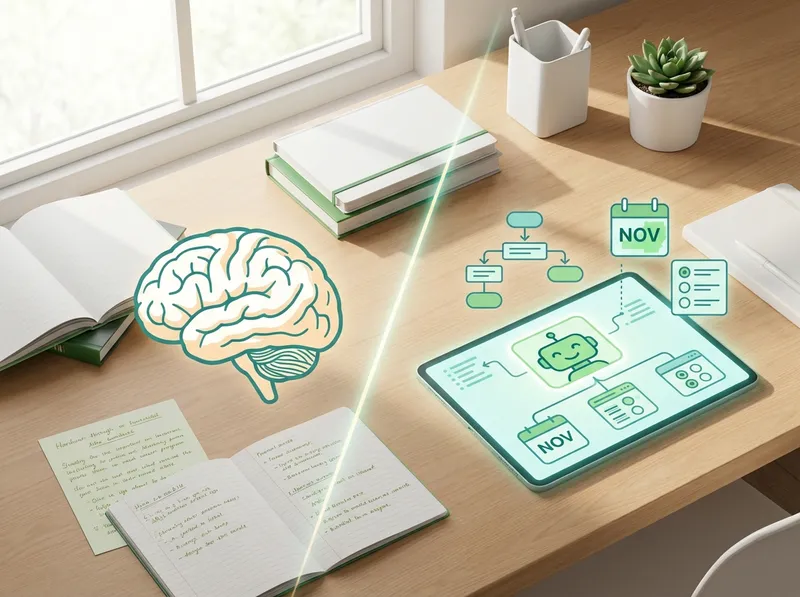
AI is useful when you treat it like atutorand not like a shortcut. In practice it can support you in three areas:understanding(explanations, examples, analogies),organization(study plans, priorities, timing) andreview(quizzes, flashcards, correcting mistakes). The main advantage is reducing “dead time”: the time you spend trying to figure out where to start, what matters, and how to check whether you’ve really understood.
That said, AI has clear limits. It can be wrong, oversimplify, or “make up” details if the prompt is vague. To use it well you need two habits: 1) provide context (syllabus, chapter, level) and 2) verify against official materials (textbook, notes, slides). The realistic goal isn’t to study without effort, but to study with moreintentionality: knowing what you’re doing and why.
AI study techniques to understand and summarize faster

The most effective AI study techniques for comprehension combinesummarization,rephrasingandtargeted questions. Instead of asking “make me a summary,” you get better results if you guide the AI with constraints: length, key points, examples, definitions, connections. This makes your study method more repeatable and less random.
- Guided summaries: ask for a synthesis in 10 lines + 5 key concepts + 3 examples applied to your syllabus.
- Concept maps: have it extract cause-and-effect relationships, hierarchies, and links between chapters, then you copy the map yourself (writing it reinforces learning).
- Layered explanations: “explain it to me like I’m a child,” then “like a high school student,” then “like a university student.” If it doesn’t add up at level 3, you’ve found a gap.
- Socratic questions: ask the AI to give you only questions (no answers) so you can arrive on your own at the definition or the proof.
A simple trick: after an explanation, ask “give me 5 open-ended questions to check if I understood”. If you can’t answer without looking at your notes, you haven’t consolidated it yet. This way AI becomes a bridge between passive study and active study.
Memorization and review: flashcards, quizzes, and spaced repetition with AI
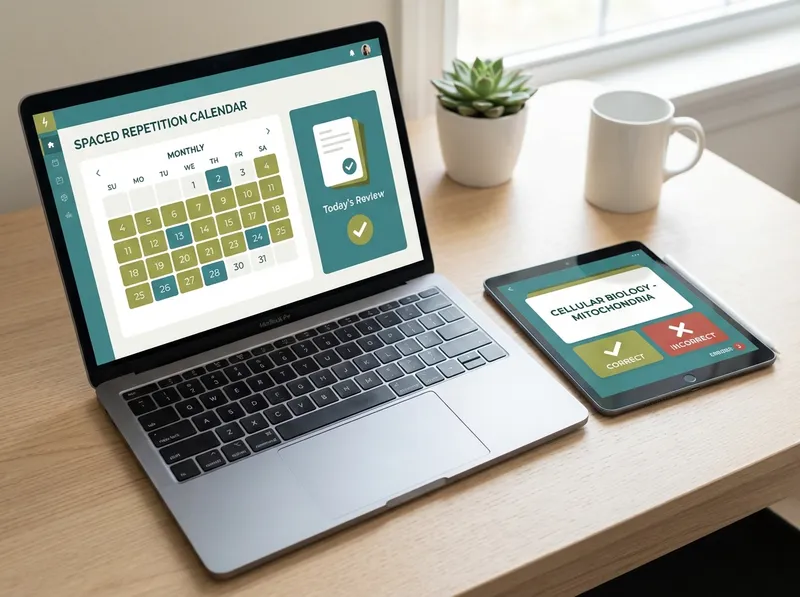
To remember long-term you need repetition over time, not rereading. Here AI is extremely strong because it can generate tailored review materials and adapt them to your mistakes. The three main levers are:flashcards,quizzesandspaced repetition(distributed practice).
How to create effective flashcards with AI: ask forshortcards, with one idea per card, also including “trap cards” about common mistakes. For quizzes, alternate multiple-choice questions (for speed) and open-ended answers (for depth). Then have the AI correct your answers, explainingwhyan answer is wrong: that’s where learning happens.
For spaced repetition, you can have it suggest a simple schedule: review after 1 day, 3 days, 7 days, 14 days, and 30 days, adjusting the intervals based on how much you miss. If in a quiz you get confused about a concept, ask: “generate 5 new flashcards only on this point and 3 application questions.” It’s a concrete way to study with artificial intelligence without wasting time creating material from scratch.
Planning and productivity: a personalized study method with AI
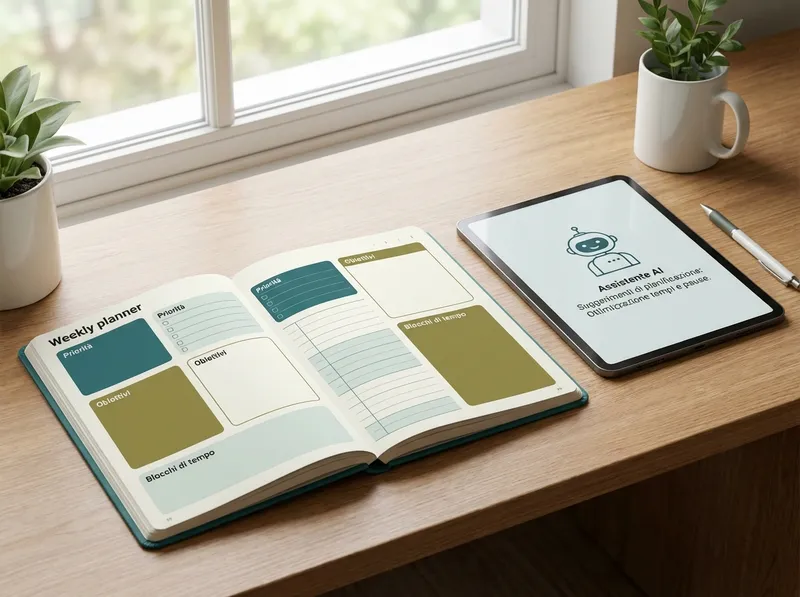
Many students don’t fail for lack of effort, but for lack of a plan. AI can help you build a more solid study method by turning generic goals (“study history”) into measurable activities (“chapter 3: summary + 20 flashcards + quiz”).
Here’s how to use AI to plan well:
- Estimate time: describe the material and the deadline, ask for an estimate for understanding, exercises, and review (including a 20% buffer).
- Alternating subjects: create 45–60 minute blocks and alternate theory and exercises to reduce mental fatigue.
- Priorities: have it rank topics into “high yield” (frequent on tests/exams) and “low yield,” without neglecting prerequisites.
- Routine and motivation: set small daily goals (e.g., “10 flashcards + 10 minutes on mistakes”) and a weekly progress check.
A practical tip: ask the AI to build the plan so that every day includes at least one activity ofactive review(quiz/flashcards) and not just new study. It’s the difference between “I read everything” and “I’ll remember it in two weeks.”
StudierAI: how it can help you study with artificial intelligence

If you want to apply these AI study techniques in an organized way,StudierAIcan help you turn materials and topics into ready-to-use tools:summaries,quizzes,flashcardsandstudy plans. Instead of spending hours formatting notes, you can focus on active study and self-checking.
Example of a typical session (60–90 minutes) to study with artificial intelligence:
- 10 min: define the goal (chapter/topic + what you need to be able to do at the end).
- 20–30 min: comprehension with layered explanations and Socratic questions on the difficult points.
- 15 min: guided summary + concept map (even just a draft).
- 15–20 min: flashcards and quiz; save mistakes as a “weakness list” for the next review.
If you want to try a ready-made flow, you canstart for freeand see how to integrate summaries, quizzes, and plans into your routine. If instead you need to understand which option is right for you, take a look atplans and pricing.
In summary: the best AI study techniques work when they make studying more active, measurable, and continuous. Start with one technique (guided summary or flashcards), apply it for a week, and then optimize. If you want to do it with a dedicated tool, you can alsosign up for freeand build a more sustainable study method, day after day.
