
In 2026, preparing for oral exams won’t just be about “knowing things,” but about being able to say them well, on time, under pressure, and often in front of a webcam. This is whereoral exam simulationbecomes a concrete lever forsmart studying: turning studying into targeted training, like you would for a practical test. Tools likeStudierAIaim exactly at this: making the oral exam more predictable, improving performance, and working onanxiety managementthrough repeated practice. If you want to understand how to prepare for 2026 exams with more confidence, you can alsoprepare exams 2026with a sustainable plan: fewer “marathons” and more short, frequent, measurable sessions. If you’re interested in understanding the project’s philosophy and the team, take a look at
. If instead you want to get straight to practice, you can

In recent years, many Italian universities have integrated (or kept) digital formats for oral exams: online exam sessions, interviews on video-call platforms, digital recording of results, and, in some cases, hybrid tests. In 2026 this trend is consolidating: it’s not just a matter of convenience, but of organization, traceability, and managing large numbers. For you, however, it means preparation must also include “performance” in a digital context.
Compared to the traditional oral exam, the digital oral exam changes some key dynamics: nonverbal communication is harder to read, timing feels faster, interruptions (connection, audio, notifications) can break your flow, and you often find yourself speaking “alone” in front of a screen. On top of that, many committees adopt more structured grading rubrics: clarity, completeness, ability to make connections, subject-specific vocabulary, handling questions.
Anxiety in an oral exam isn’t a character flaw: it’s a normal response to an evaluative situation. The problem arises when anxiety makes you speak worse than what you actually know.
- it improves through two levers: routine (before the exam) and gradual exposure (training in similar conditions). Here AI can help because it makes exposure repeatable: you can simulate multiple times, with variations, until the “oral exam context” stops being something new.
- Practical strategies you can use starting today:
- Pre-oral routine (10 minutes): water, posture, a clean desk, two slow breaths, and a micro-outline of the 3 concepts you want to bring out.
- “Box” breathing (4-4-4-4): inhale 4 seconds, hold 4, exhale 4, hold 4. Repeat 3 times before connecting.
Gradual exposure: 1) 60-second answers, 2) 2-minute answers, 3) full simulations with surprise questions and a timer.
Opening script: prepare 2–3 standard sentences to start well (it reduces the initial “blank”). Example: “I’ll define the concept, then explain the key points, and close with an application.”

A realistic simulation isn’t a simple list of questions. It’s a session that reproduces exam conditions: questions with varying difficulty, requests for definitions, links between topics, applied examples, and follow-ups based on what you say. The goal is to take you from “I know the theory” to “I can present it convincingly.”
Because it speeds upIf in your 2026 plan you want a method that combines content, delivery, and feedback, integrateoral exam simulation
start for free
- Opening: definition or thesis in one sentence.
- Development: 2–3 key points in logical order.
- Example: concrete case, application, or counterexample.
- Closing: link to a related topic + a sentence that invites the next question.
Simulation also helps you with unexpected questions: when you train, you learn to recognize patterns (“they’re asking me for a comparison,” “they want an application,” “they’re testing the limits of the definition”) and to answer without going off topic. It’s the most direct way toprepare exams 2026with a measurable strategy, not just with hours of studying.
StudierAI: the new way to simulate an oral exam realistically (and personalized)

When we talk about simulation, the point isn’t “asking lots of questions,” but asking the right questions, in the right way, and receiving useful feedback.StudierAIwas created with the idea of making preparation more concrete: an environment where you can train with anoral exam simulationthat resembles what really happens, but without the pressure of a grade.
In practice, a good path with StudierAI can include:
- Personalized simulations based on your course/syllabus: questions targeted to the chapters you’re studying, with increasing difficulty.
- Feedback on content and delivery: what’s missing, what’s inaccurate, where you’re using “empty” words, and how to make the explanation more linear.
- Training on connections: you learn to move from one concept to another without losing coherence, as a committee often requires.
- Progress tracking: you see which topics you’ve consolidated and which still require active repetition.
This approach is particularly useful if you want toprepare exams 2026with a sustainable plan: fewer “marathons” and more short, frequent, measurable sessions. If you’re interested in understanding the project’s philosophy and the team, take a look atwho we are. If instead you want to get straight to practice, you cansign up for freeand set up the first simulations.
Anxiety management before and during the oral exam: practical strategies supported by AI
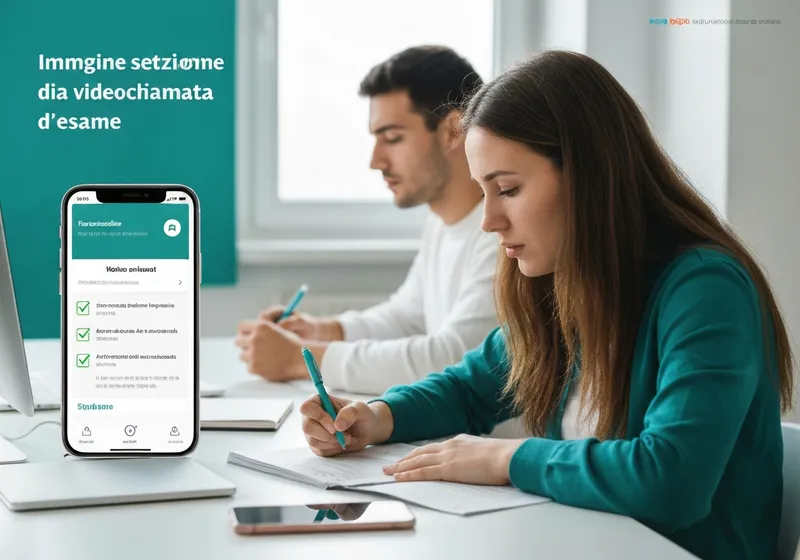
Anxiety in an oral exam isn’t a character flaw: it’s a normal response to an evaluative situation. The problem arises when anxiety makes you speak worse than what you actually know.anxiety managementit improves through two levers: routine (before the exam) and gradual exposure (training in similar conditions). Here AI can help because it makes exposure repeatable: you can simulate multiple times, with variations, until the “oral exam context” stops being something new.
Practical strategies you can use starting today:
- Pre-oral routine (10 minutes): water, posture, a clean desk, two slow breaths, and a micro-outline of the 3 concepts you want to bring out.
- “Box” breathing (4-4-4-4): inhale 4 seconds, hold 4, exhale 4, hold 4. Repeat 3 times before connecting.
- Gradual exposure: 1) 60-second answers, 2) 2-minute answers, 3) full simulations with surprise questions and a timer.
- Opening script: prepare 2–3 standard sentences to start well (it reduces the initial “blank”). Example: “I’ll define the concept, then explain the key points, and close with an application.”
- Anti-freeze bridge phrases: “I can frame it like this…”, “The central point is…”, “Let me give an example to clarify…”. They help you regain control without seeming insecure.
Training with repeated simulations makes the exam more predictable: not because you already know the questions, but because you’ve already experienced the “pattern” of the interrogation. When the mind recognizes the scenario, anxiety drops and cognitive resources become available again to reason, connect, and explain. In other words: simulation doesn’t replace studying, it makes it usable.
If in your 2026 plan you want a method that combines content, delivery, and feedback, integrateoral exam simulationin your weekly routine: even 2 sessions of 15–20 minutes can make a difference. When you’re ready, you canstart for freeand build a smart study path, closer to how you’ll actually be evaluated.