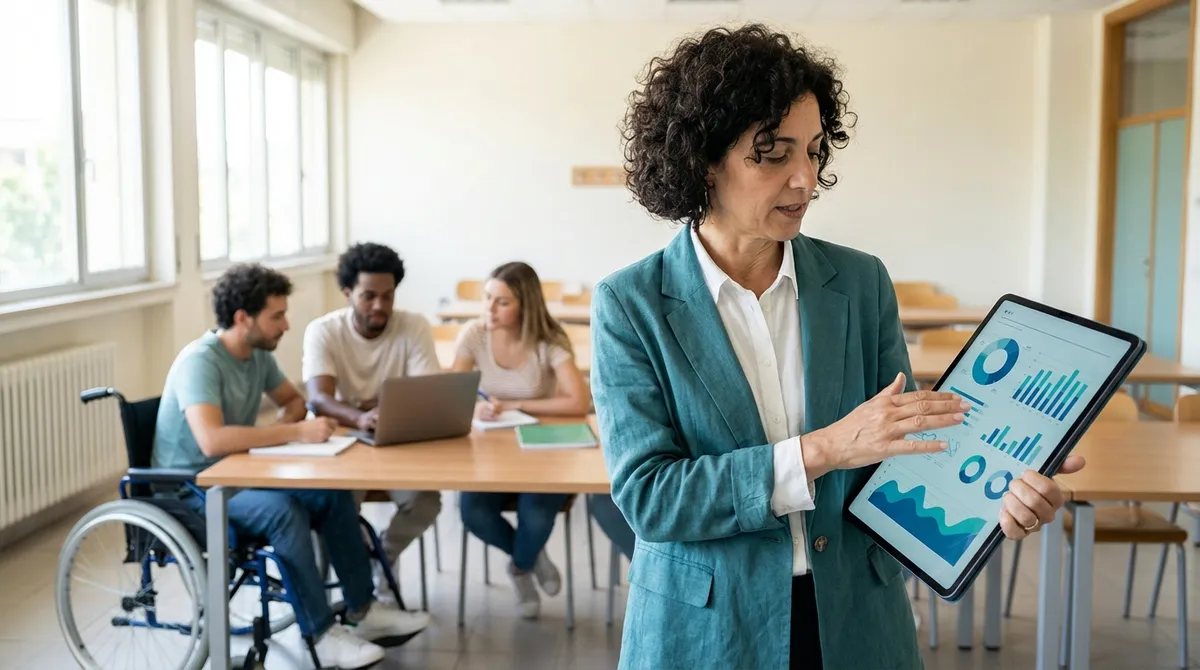

In 2026, the challenge isn’t “doing more technology,” but making learning more targeted, inclusive, and measurable. Theadaptive personalizationpowered by AI makes it possible to turn data and feedback into timely instructional interventions, without increasing the teacher’s workload. Tools likeStudierAIfit into this landscape withexam simulationandstudy planningfeatures to support teachers and students throughout the entire journey: from diagnosing gaps to ensuring continuity of learning. If you want to explore the project’s approach and vision, you can also start fromabout us.
Why adaptive personalization is changing teaching in 2026
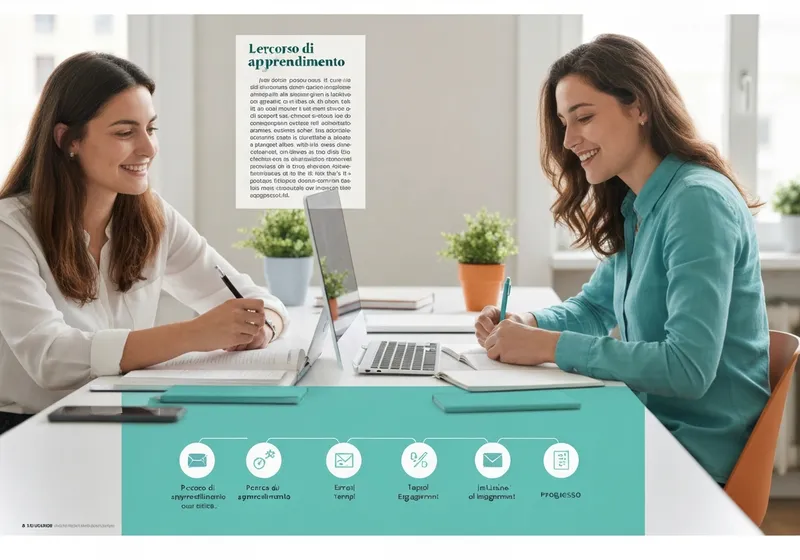
By “personalization,” people often mean choosing different materials for different groups or assigning differentiated tasks.adaptive personalization, instead, is dynamic: an AI-based system updates the pathway based on what the student demonstrates they know (and don’t know) moment by moment. It’s not a “one-off plan,” but a continuous cycle of observation, hypothesis, intervention, and verification.
For teachers, the value lies in the ability to make visible patterns that are hard to spot in the classroom: which concepts block the most students, which skills are fragile, who is moving forward by memorization and who by understanding. For students, the benefits are tangible:
- Inclusion: pathways that adapt to pace and prerequisites, reducing frustration and dropout.
- Motivation: achievable goals and frequent feedback increase self-efficacy and participation.
- Results: more time on real difficulties, less time on exercises already mastered.
In short, adaptivity shifts teaching from “the same for everyone” to “fair for each person,” while keeping clear teacher guidance: shared goals, different routes to reach them.
Data, signals, and feedback: how adaptivity works in real time in the classroom
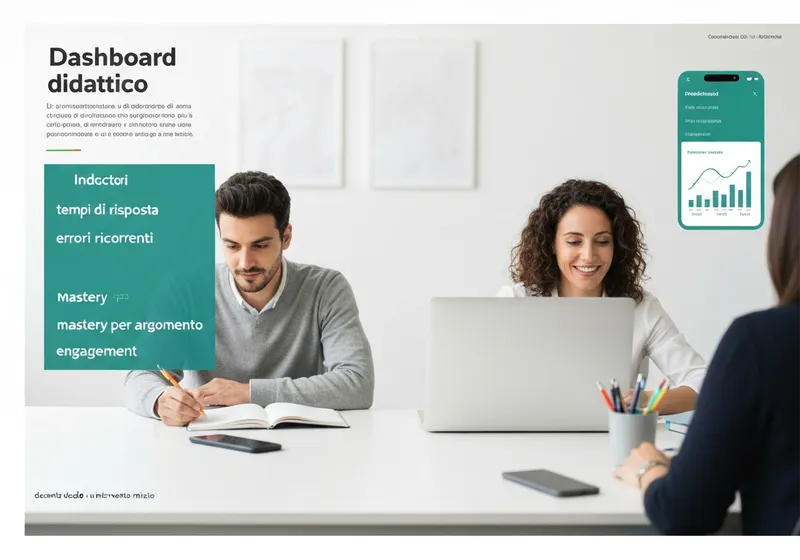
Effective adaptivity isn’t based on a single grade, but on a combination of signals. In ainnovative teachingcontext, the main useful signals are:
- Recurring errors: they indicate stable misconceptions (e.g., confusion between similar concepts) rather than “inattention.”
- Response times: overly fast times with errors can signal guessing; long times with high accuracy can indicate overload or insecurity.
- Mastery levels: a progressive estimate by objective, useful for deciding on review or advancement.
- Engagement: frequency, consistency, drop-offs mid-activity; it signals when to simplify, break things up, or vary the format.
The key point for the teacher is turning signals into immediate actions. Practical examples: a 7-minute mini-lesson on an emerging misconception, temporary catch-up groups on a prerequisite, or selecting exercises with graduated difficulty to consolidate. AI doesn’t replace instructional decision-making: it makes it better informed and faster.
Exam simulation: designing formative assessments that improve performance and metacognition

Theexam simulationis one of the most effective ways to train not only content, but also strategies: time management, careful reading of the prompt, anxiety control, prioritization. If made adaptive, it also becomes a diagnostic tool: it proposes targeted items and measures the stability of skills over time.
A sustainable (and replicable) weekly routine could be:
- Monday: an 8–10 minute micro-quiz on prerequisites (quick diagnosis).
- Wednesday: a short “section-based” simulation (e.g., 15 minutes) with immediate feedback on typical errors.
- Friday: guided metacognitive reflection (3 questions): “What did I get wrong and why?”, “Which strategy will I use next time?”, “What is my next micro-goal?”.
For assessment, it’s best to separateformativeandsummative: in simulations, reward consistency, improvement, and the quality of self-correction. A simple criterion: 40% accuracy, 30% improvement compared to the previous week, 30% reflection (evidence of strategy). This way, practice reduces performance anxiety because the student sees a pathway, not an isolated judgment.
Smart study planning: from cognitive load to continuity of learning
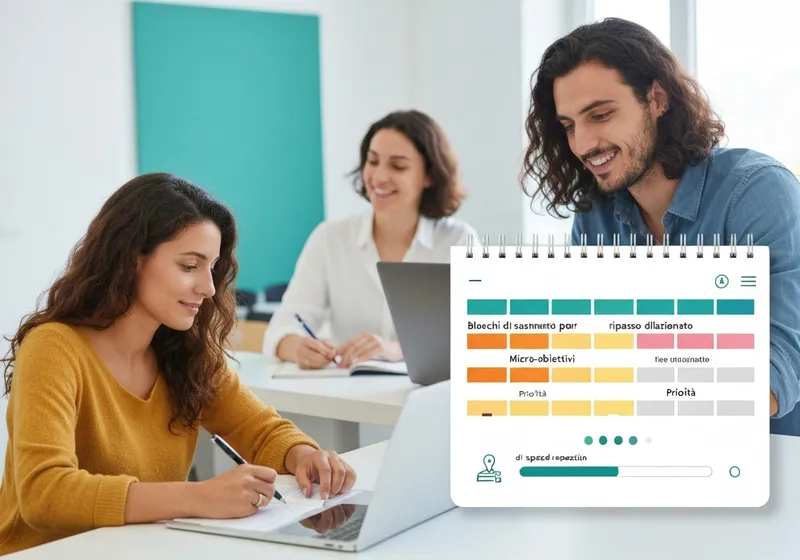
Many students don’t fail for lack of effort, but because of ineffective time and cognitive-load management: sessions that are too long, last-minute cramming, vague goals.study planningsupported by AI can distribute activities more sustainably: spaced repetition, alternating between topics (interleaving), daily micro-goals, and priorities based on mastery and deadlines.
For teachers, integration works when planning isn’t “a world of its own,” but connects to: assigned homework, test dates, class objectives, and prerequisites. A good operating model is: define minimum and advanced objectives, suggest review windows (e.g., 10 minutes at the end of the day), and monitor consistency more than quantity. In practice, 20 minutes a day for 5 days is better than 2 hours in a single evening.
An effective instructional move is to make the logic of planning explicit: “review when I’m about to forget,” not “review when I have time.” This improves autonomy and metacognition, and reduces the gap between students with family support and students who are more on their own in organizing.
How StudierAI can help teachers: workflow, use cases, and best practices
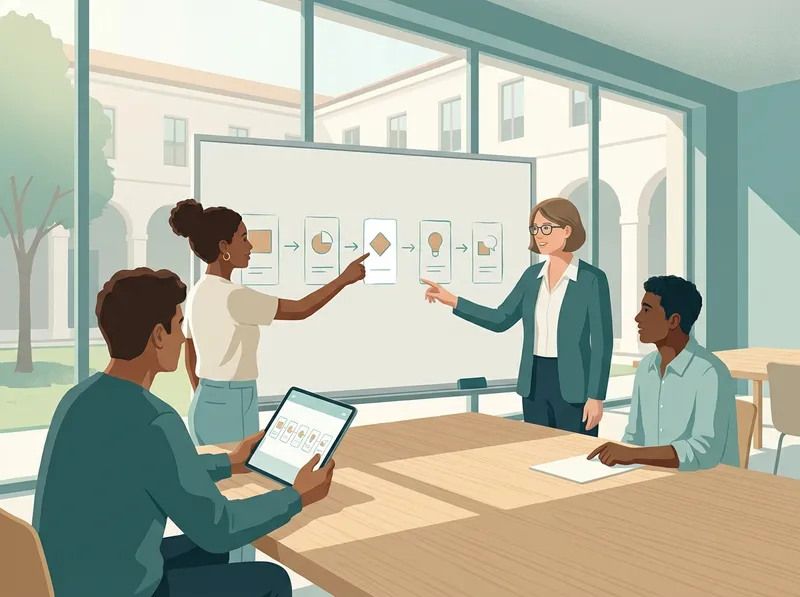
A simple workflow withStudierAIcan follow five steps, keeping instructional direction in the teacher’s hands:
- Goal setting: define competencies and core foundations (minimum/advanced) and success criteria.
- Adaptive personalization: assign activities that adjust to difficulty and prerequisites, with immediate feedback.
- Exam simulation: schedule short, frequent simulations to consolidate, diagnose, and train strategies.
- Study planning: generate weekly plans with micro-goals, spaced reviews, and priorities focused on gaps.
- Monitoring: read trends (not just scores), identify who is struggling, and plan targeted interventions.
Best practices for classroom adoption: start with just one module (e.g., weekly quizzes) for 3–4 weeks, agree with students on clear rules (timing, goals, use of feedback), and communicate to families that the tool is meant to make studying more continuous and less “last-minute.” Finally, use the data for educational conversations: “which strategy worked?” rather than “what did you get?”. If you want to try it with a first pilot group, you canstart for freeand build a gradual pathway, centered on evidence and student well-being.
